Robert H. Woodworth Lecture in the Sciences: David J. Helfand
Contact:
OPEN TO THE PUBLIC | Established in 1988 by former students, the Robert H. Woodworth Science Lecture Series honors a longtime Bennington biology faculty member and pioneer in the development of time-lapse photography.
David J. Helfand: The Universal Timekeepers: Reconstructing History Atom by Atom
Atoms are unfathomably tiny. It takes fifteen million trillion of them to make up a single poppy seed —give or take a few billion. And there’s hardly anything to them: atoms are more than 99.999999999 percent empty space. Yet scientists have learned to count these slivers of near nothingness with precision and to peer into their internal states. By looking closely, we have learned that atoms, because of their inimitable signatures and imperturbable internal clocks, are little archives holding the secrets of the past. We show how, by using detectors and reactors, microscopes and telescopes, we can decode the tales these tiny particles tell, answering questions such as: Is a medieval illustrated prayer book real or forged? How did maize cultivation spread from the highlands of central Mexico to New England? What was Earth’s climate like before humans emerged? Where can we find clues to identify the culprit in the demise of the dinosaurs? When did our planet and solar system form? Can we trace the births of atoms in the cores of massive stars, or even glimpse the origins of the universe itself? The Universal Timekeepers demonstrates the power of science to unveil the mysteries of unreachably remote times and places.
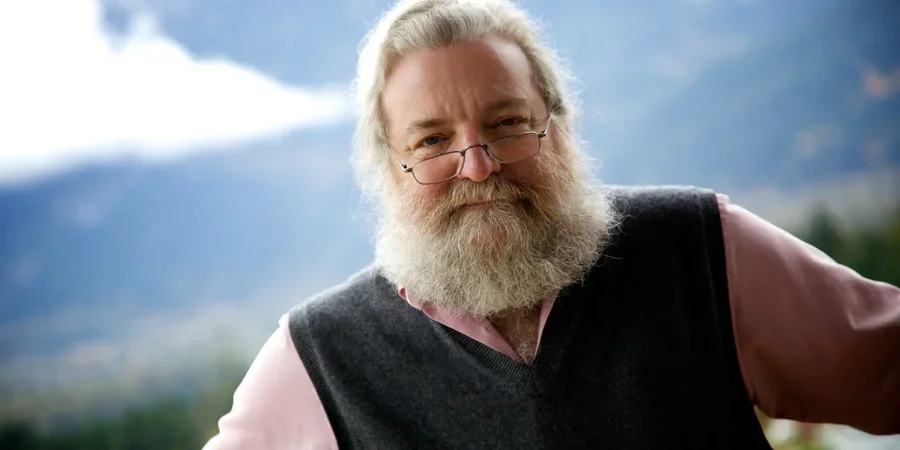
David J. Helfand, a faculty member at Columbia University for 48 years, served nearly half of that time as Chair of the Department of Astronomy. He is the author of over 200 scientific publications and has mentored 22 PhD students, but most of his pedagogical efforts have been aimed at teaching science to non-science majors. He instituted the first change in Columbia's famed Core Curriculum in 75 years by introducing the course Frontiers of Science, now required for all first-year students. In 2005, he joined an effort to create Canada's first independent, non-profit university, Quest University Canada, where he served as President & Vice-Chancellor from 2008-2015. He completed a four-year term as President of the American Astronomical Society, and is currently Chair of the American Institute of Physics. His first book, A Survival Guide to the Misinformation Age appeared, appropriately enough, in 2016. His second book, The Universal Timekeepers: Reconstructing History Atom by Atom appeared last fall.