Bennington College’s Purple Carrot Farm Prepares for the Growing Season
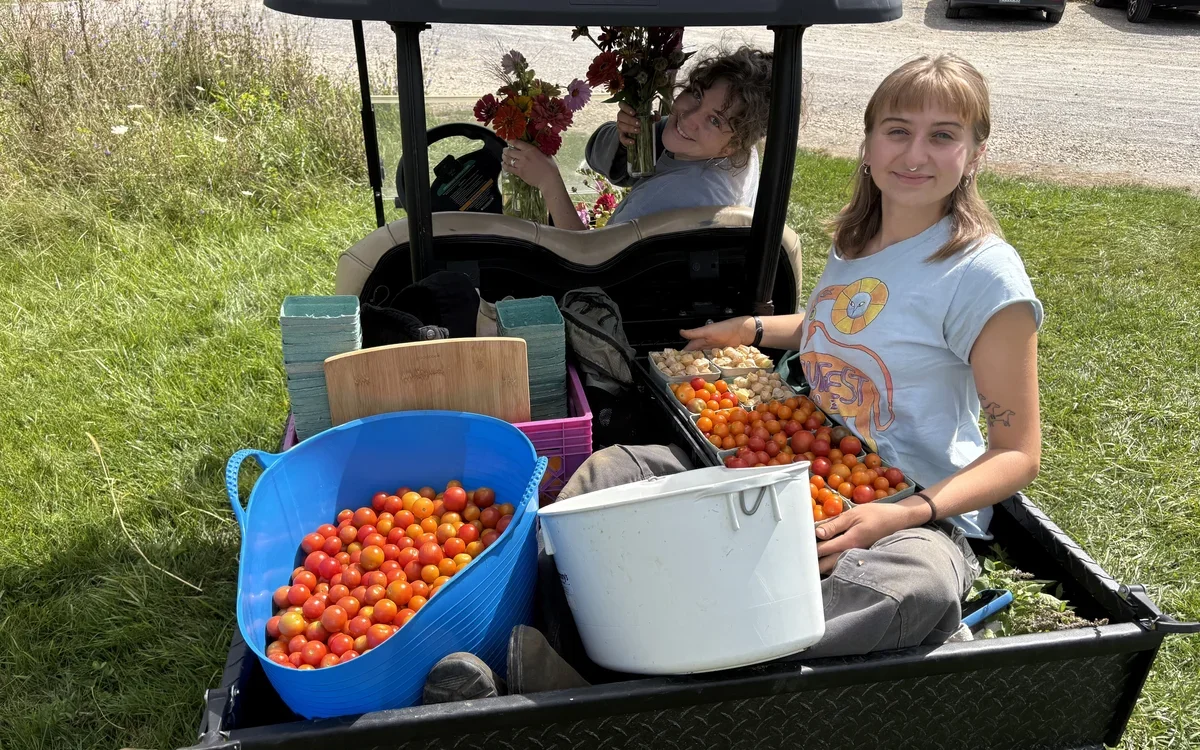
As spring arrives in Bennington, preparations are underway for another growing season at Purple Carrot Farm—a 1.2-acre campus farm that has rapidly expanded its production, student programming, and community partnerships in recent years. The farm serves as a food source for the campus and as a living classroom where students study sustainable agriculture and local food systems.
A Ultra-Local Food Source
Thanks to funding from the Bennington Fair Food Initiative grant, the farm’s production has increased by about 700 percent in the last three years. The funding has helped build infrastructure, launch student-led projects, and expand the farm’s role in the regional food network.
The farm produces more than 5,000 pounds of food for the Dining Hall each year. Farm manager Kelie Bowman now works with dining staff each year to plan what crops will be grown based on kitchen needs.
This year, the farm will deliver cherry tomatoes, radishes, lettuce, mustard greens, bok choy, cabbage, jalapeños, summer squash, winter squash, root vegetables, and sunflowers, all in amounts that surpass last year’s totals, Bowman said.
“Having vegetables from Purple Carrot Farm on campus tends to change the feeling of food in a subtle but noticeable way,” said Joshua Ruff, executive chef at Aramark, the food services company partnered with Bennington. “It makes meals feel closer to where you are—not abstract or shipped in, but rooted in the same place you work and feed students.”
A Farm and a Classroom
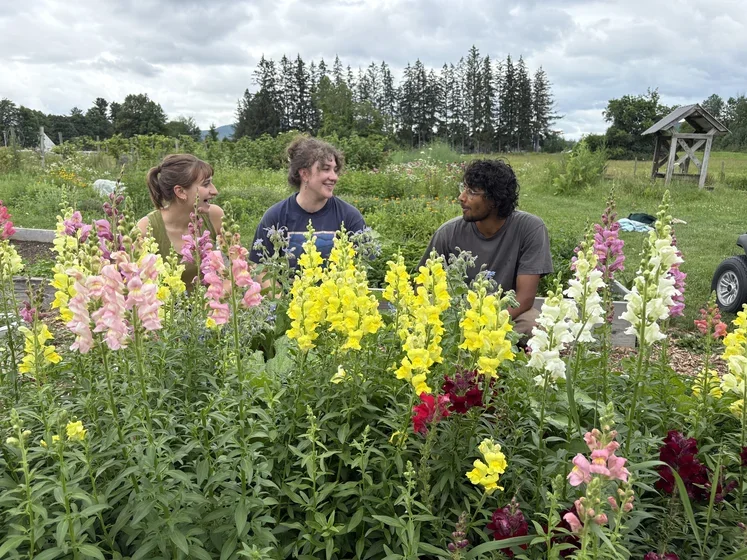
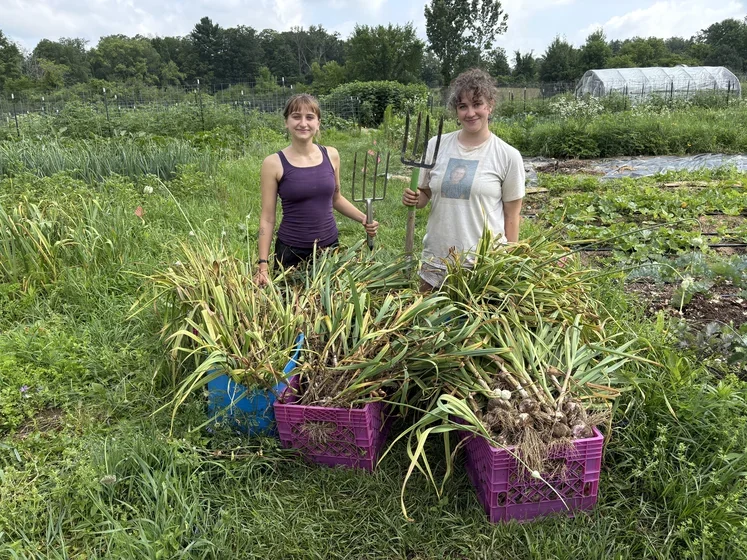
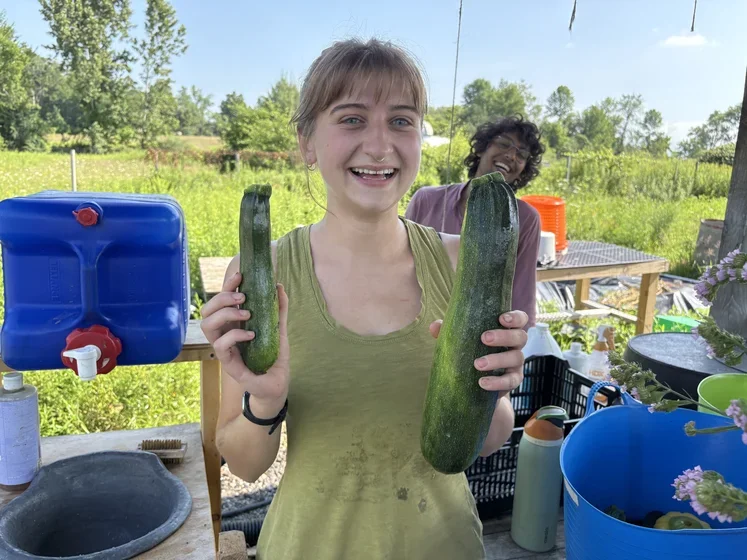
Students studying sustainable agriculture at the College take courses that combine readings, and discussions with hands-on work at the farm. In addition to growing vegetables, students learn skills such as crop planning, propagation, food preservation, and farm business management.
“While you can learn about farming from textbooks, nothing beats the muscle memory of actually working in the dirt,” said Isabella Cohn ’26. “This is a rare opportunity to actually be able to learn how to farm—identify plants, successfully seed, transplant, and propagate, and all of the small tips and tricks to planting and farming that are gained only through experience.”
After completing introductory coursework, many students design their own independent projects on the farm. This term, a student is making an educational dye garden. Another has made a medicinal herb garden and is working on producing herbal tea and improving infrastructure for faster processing of dried herbs. Other students focus their work on improving the garden itself by building tools, making compost teas, attracting pollinators, planting wind breaks, incorporating integrated pest management, and testing alternatives to plastic mulch.
“Most farms work on a deadline, are established, and already know what they want to do,” Cohn continued. “There’s no financial room or time to explore or even have an opportunity to learn, because there’s no room for error and so much at stake."
"Here, we can try innovative experiments without having to justify or guarantee the outcome," said Cohn. "We can make mistakes, try new things, and make discoveries that can ultimately benefit the farm and community as a whole.”
Community Connections
Beyond the campus, the farm is becoming more integrated into the regional food system. Field trips connect students with a range of regional food producers, including organic vegetable growers, mushroom farms, and nonprofits focused on biodiversity and food access.
Purple Carrot Farm is now a key partner in the Bennington Community Farmers Market, which launched in 2025 and helps bring locally grown food to residents of the surrounding community.
Students also collaborate with Watson Wheeler Cider through a hands-on orchard program. Each year, students harvest apples that are pressed into cider. The cider is later fermented and sold by the cidery as hard cider, while staff from Watson Wheeler return in the spring to teach students pruning techniques and the basics of orchard management. It benefits the farm, the students, and the local business while strengthening connections between agriculture, education, and the land.
Looking Ahead
As the new growing season approaches, Bowman said the farm will continue expanding both its production and its educational mission.
By combining food production, student learning and community partnerships, Purple Carrot Farm aims to demonstrate how small-scale agriculture can support both environmental sustainability and local food security.