Living from the Inside Out
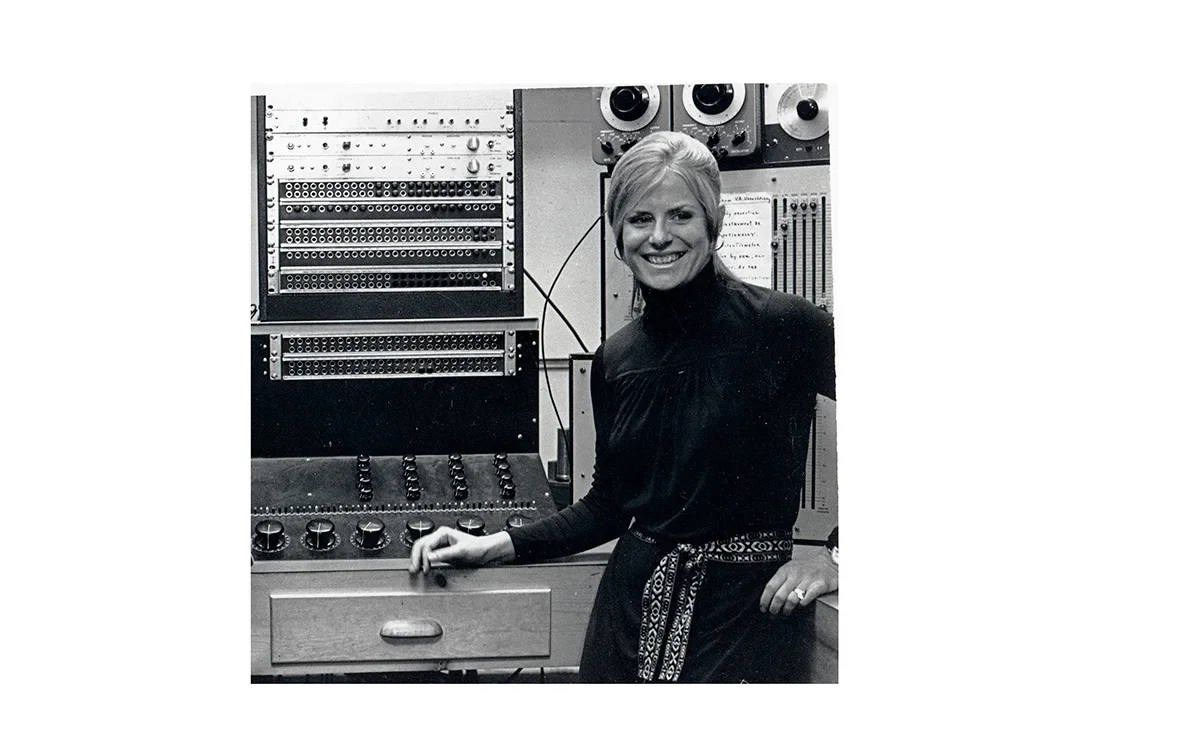
Pril Smiley ’65 reflects upon her experience at Bennington College, career as a composer, and her multi-faceted life.
Bennington was the only college I wanted to attend, and I’ll be forever grateful that I got in, considering my distinctly unimpressive high school grades. I thought I wanted to study architecture or psychology, but after a first-year term in [faculty member] Henry Brant’s music class, I knew that music composition was to be my focus.
Later, I would come to say that I was really majoring in Bennington’s incredible music faculty, not music subjects. Jennings [Music Building] became my home; the faculty became my family. Developing as a composer was a means, not an end, as my teachers offered provocative, challenging, and valuable perspectives, as well as “life advice.”
At one point Lou Calabro refused to continue teaching me composition unless I took voice lessons with Frank Baker; he said my composing was hampered by my fear of feeling, and committing to, longer lines of musical expression—letting my soul sing from the inside out, as opposed to my trying to “control” everything with imposed percussive/rhythmic writing. George Finckel scolded me one day as I was playing a fast-moving cello passage and struggling to get my fingers to land perfectly on the fingerboard for the correct pitches: "Goddamn it, Smiley, the music is in between the notes!” I’m still working on these lessons.
My sophomore Field Work Term in 1963, as an intern at the Columbia-Princeton Electronic Music Center, provided the launching pad for the ensuing decades of my music career. The electronic music field was in its first few years of existence in the United States, having actually been “founded” in Bennington’s Carriage Barn by Columbia professors Vladimir Ussachevsky and Otto Luening. Following my initial internship, I became intensely involved (weekends, Field Work Terms, summers) in electronic music as an apprentice to Ussachevsky. Later, I learned that I was the first female electronic music composer on the east coast, and I am now listed as one of six electronic music pioneers.
Upon graduating, I “walked into” a teaching assistant job at Columbia—electronic music composition courses were only beginning to be offered, and the field was so new that only a handful of us even had the experience to be able to teach graduate-level composers. Over the next 30 years, I continued to teach, as well as serve as associate director at the Center. As a resident composer there, I wrote electronic music for over forty theatre, film, and dance productions, and served for six years as Electronic Music Consultant for the Vivian Beaumont Theatre at Lincoln Center after it had just opened.
Meanwhile, other post-Bennington aspects of my life were equally engaging and fulfilling: in the mid-1970s, being an avid downhill skier, I spent a Guggenheim Fellowship year (composing and skiing) in Alta, Utah. I had fallen in love with a ski-area employee, and I spent the next 17 years commuting between New York and Utah. We mostly lived in our 1967 VW bus and spent extensive time kayaking in Idaho, exploring canyons in southern Utah, and backpacking in the Wind River Mountain Range in Wyoming.
In the mid-1990s, life changed radically, as I severed my Utah connections, resigned from Columbia, and got married to Keith LaBudde—a rock climber and retired professor. I had moved back to the Hudson Valley area of New York where I grew up, to be part of my family’s business, Mohonk Mountain House. Mohonk was founded by my forebears in 1869—I’m fourth generation—and I have been heavily involved in that family enterprise since 1972.
I’ve had a fascinating and multi-faceted life—with favorable odds for a bit more to follow. I do not measure myself or others in terms of “accomplishments;” “processes” have always been more exciting and meaningful to me than “results,” and the older I get, the more strongly I feel that ultimately, it’s people connections that really matter. I find much to value in every day and continue to seek ways to live fully from the “inside out.”