A Real Solution for “Mystery Illnesses”: Audre Wirtanen ’16 and Hyp+Access
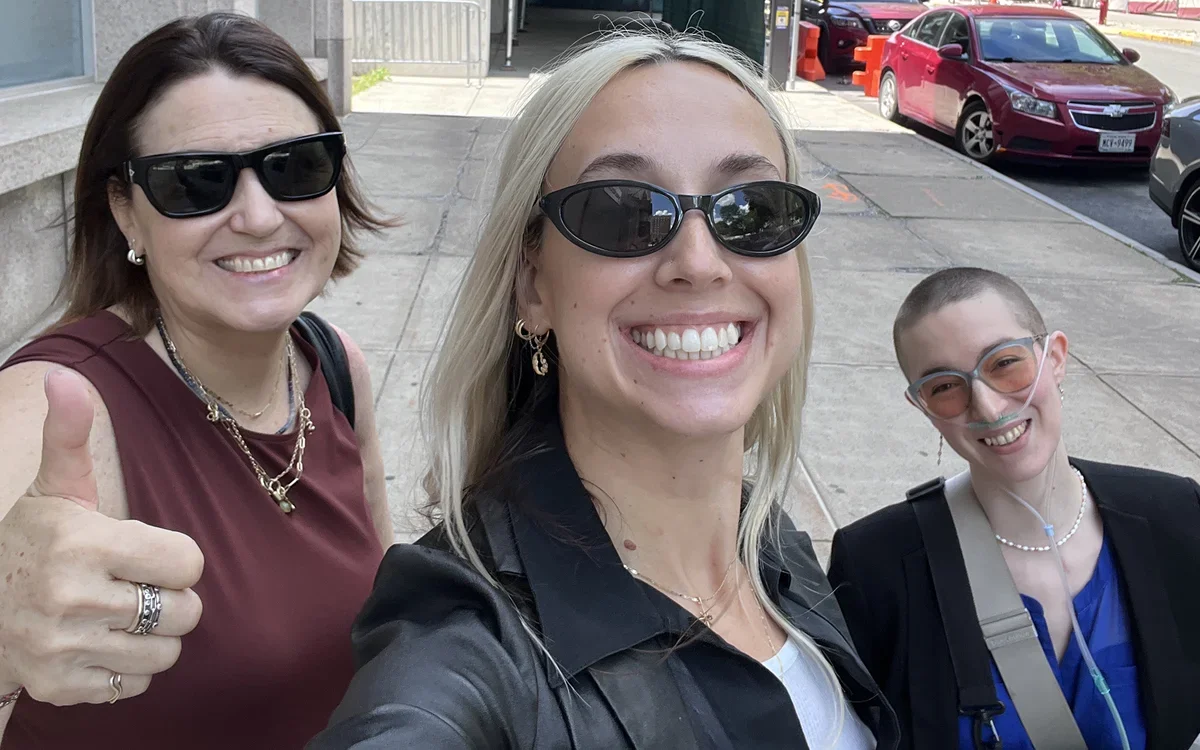
Clinical Director Dr. Susan Polizzi, Audre Wirtanen '16, and L. Tuthall after having received Article 28 Contingent Approval from the New York State Department of Health in June 2026.
“Mystery illnesses,” including connective tissue disorders, infection-associated chronic illnesses, and their related conditions, have confounded medicine for ages, leaving a massive gap in medical care for some of the sickest, most complex patients.
Audre Wirtanen ’16 and her business partner L. Tuthall are doing something about it.
They are working to overcome bias, medical complexity, and the highly entrenched medical establishment to open a first-of-its-kind Article 28 Diagnostic and Treatment Center for people with these complex, chronic conditions. It’s called Hyp+Access.
“First of all, we are patients ourselves who do not have our needs met,” said Wirtanen. “We built our knowledge of complex patients and their needs initially by providing care coordination and advocacy services, but quickly realized there was no mainstream care model that worked.”
Wirtanen’s difficulty began in childhood. She had always been told that her pain was related to stress. When she was a student at Bennington College—studying dance, neuroscience, and chemistry—she used Field Work Terms located in different cities to see different doctors. She would simply ask, “What’s going on?”
She never got a satisfactory answer, until she met Tuthall during a bodywork training program. Tuthall guessed, based on their experiences, that the two had the same conditions.
“I was like, ‘Oh, that makes so much sense,’” said Wirtanen. “All of the puzzle pieces came together, and L. helped me get access to a diagnosis.”
Together, they committed to helping patients like themselves live healthier and more fulfilling lives. That patient-driven approach makes all the difference, because Wirtanen and Tuthall understand exactly what it is really like to use a medical system with so many barriers.
Bias and Stigma
Tuthall and Wirtanen were not alone. For decades, people who experience a broad range of interconnected complex, chronic conditions—like hypermobile Ehlers-Danlos syndrome and hypermobility spectrum disorders; fibromyalgia; POTS and other kinds of dysautonomias; mast cell disorders; infection-associated chronic illnesses like long COVID, chronic Lyme and myalgic encephalomyelitis—have all been mistreated and mismanaged by the medical system.
First, Wirtanen explained, “the system is biased against women, people of color, queer and trans people, autistic and neurodivergent people, and poor people. The conditions tend to affect every oppressed demographic more, which is, in part, why they're not supported.”
When patients with these conditions do see a medical provider, approximately 94% of patients experience psychiatric misdiagnosis.
“The patients end up being ‘psychiatrized,’” said Wirtanen. Instead of believing their symptoms have a true biological basis, the medical professionals tell patients that they are “not processing stress well” or it is “all in their head.” “Not only is it a psychiatric misdiagnosis, it is actually a significant systemic barrier to other forms of needed care,” she said.
What makes the situation even more complex is that psychiatric problems can arise from untreated chronic conditions, Wirtanen noted. When chronic conditions are not supported, patients understandably develop anxiety and depression.
Diagnostic, Systemic, and Regulatory Complexity
Connective tissue disorders, infection associated chronic illnesses, and related conditions are complex in themselves. Patients experience overlapping symptoms that involve multiple body systems simultaneously. The symptoms and related conditions show up in any order at any time. The current U.S. medical system does not have a framework to address multi-system, interconnected concerns.
“These are conditions that are way more common than anyone is really willing to acknowledge in a clinical setting,” said Wirtanen. “People are not trained in them as a result.”
Consequently, the patients get passed around or refused treatment.
In addition to faulty psychiatric diagnoses, and other forms of misdiagnosis, patients often have an average of ten diagnoses before they receive the one that pulls everything together. It's very rare for somebody to have fewer than three conditions.
“The patient journey is expensive. It's intense. It's kind of horrifying at all socioeconomic levels,” said Wirtanen.
A New Approach: Hyp+Care
Wirtanen and Tuthall started coordinating care and providing advocacy services to patients across the globe. They developed safety protocols for people who sought alternative care, as this is also an issue in the community. Due to providing resources where major gaps existed, they built a network of patients and resources to guide their care.
“We developed a trust relationship with patients to where they would just come and tell us everything that would happen [with their providers],” Wirtanen said. “We were able to see the administrative problems, who [the providers] were biased against, and the things [providers] would do and say that were totally unacceptable.”
They also saw how people on Medicaid were treated versus how those with wealth were treated, Wirtanen said. “We saw how different health systems worked in different countries: including Canada, the UK, Switzerland, and Brazil.”
They used all of the information they gathered to design Hyp+Care’s services, recruit their medical director Dr. Susan Polizzi, and begin the regulatory process. They have gotten through some of the most significant hurdles and expect to open in 2027. They already have 6,000 patients ready for their care.
“Establishing our own clinic allows us to do different things together,” said Wirtanen, “and design a more comprehensive model based on what our patient base really needs.”
Note: The interview for this story was transcribed by artificial intelligence.