Bennington Students Engage VT Housing Officials
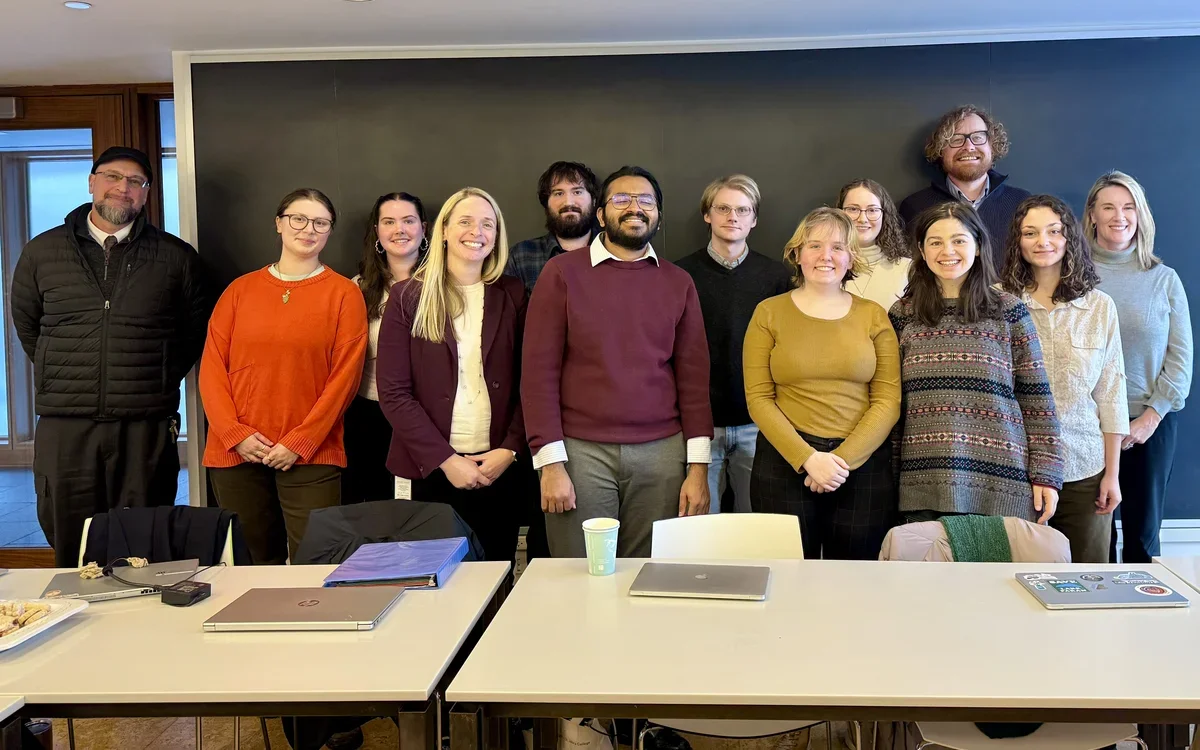
Vermont officials overseeing state housing policy met with Bennington College students from the “Housing in America, Housing in Bennington” class taught by CAPA Associate Director David Bond.
Vermont Deputy Secretary of the Agency of Human Services (AHS) Kristin McClure and VT Deputy Commissioner of Economic Services Division (ESD) Miranda Grey sat down with a dozen students in CAPA last Friday to explain how the State of Vermont is responding to the housing crisis.
Vermont now stands fourth on the dismal podium of per capita homelessness in the United States, with shelters and housing nonprofits across the state overwhelmed by a growing need for emergency housing. Governor Phil Scott recently noted that 1 in 4 renters in Vermont now spend upwards of 50% of their income on housing, an unprecedented level of housing insecurity in Vermont.
Deputy Commissioner Grey described her office phone lines ringing off the hook as temperatures dipped below freezing this week. “We’re had thousands of calls just this week,” Grey said, from Vermont families pleading for a warm place to sleep. “We can’t keep up.”
Bennington is one of areas hit hardest by the housing crisis in Vermont, according to McClure and Grey. The public shelter in Bennington can house 9 families and 16 individuals, most of whom occupy their rooms for a few months while they get back on their feet. For the past year, Bennington’s shelter has faced an average of 400 households requesting emergency housing each month.
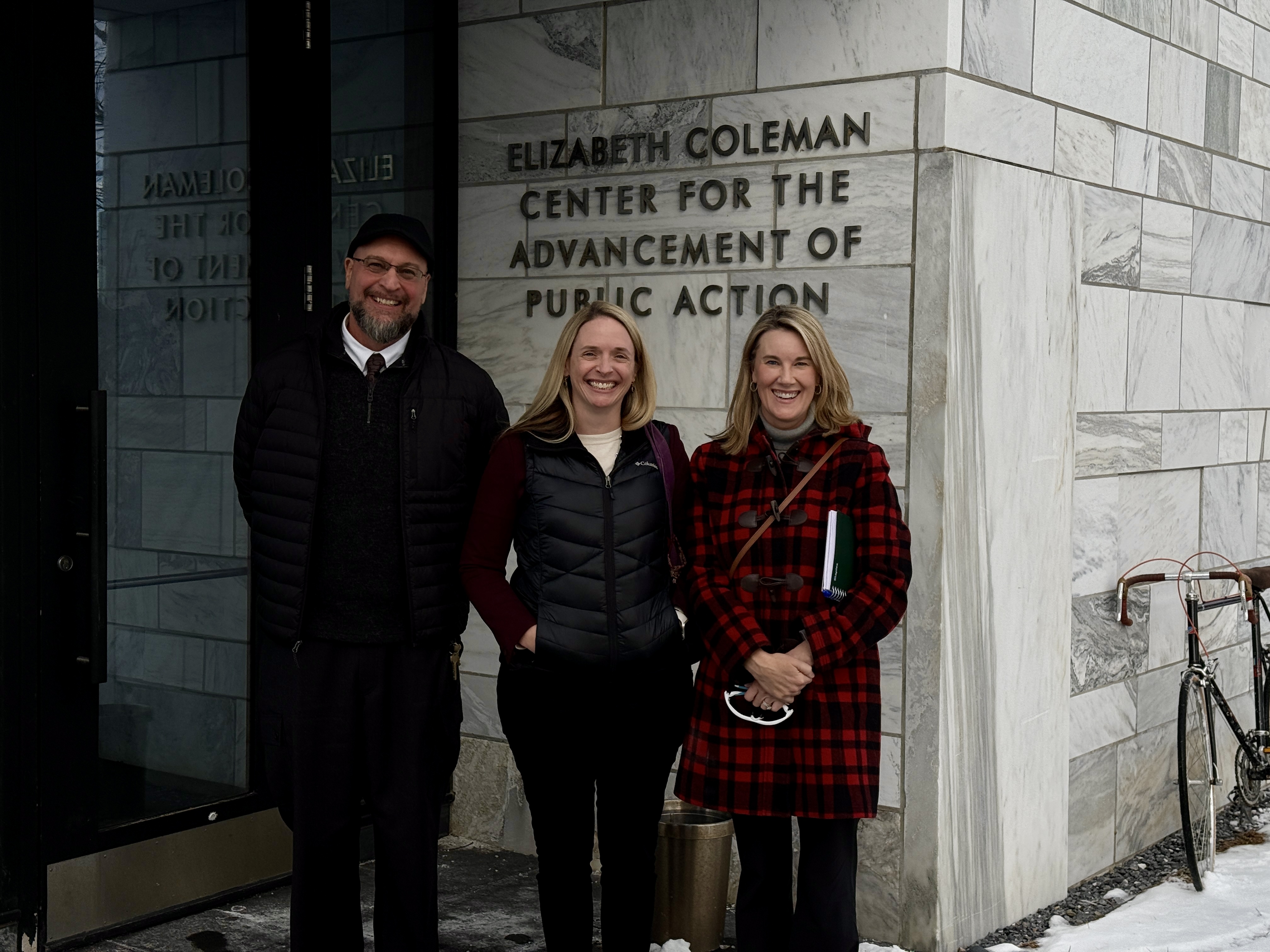
Deputy Secretary McClure and Deputy Commissioner Grey explained how housing for poor and working Vermonters shifted radically during COVID, and has only grown more unaffordable since. “Crisis is the right word,” said McClure, who described it as a “perfect storm” that no one in Vermont saw coming.
After five years of housing slipping further out of reach, Nora Beer ’26 asked if unaffordable housing is an exceptional event or the new reality for Vermonters?
“Thank you for asking that,” Deputy Secretary McClure said. “Listening to you, it’s like, oh my gosh, is this our new normal? Does Vermont need to figure out how we respond to this new normal?”
Mattias Van Cleef ’26 followed up by reading the introduction of a July 2025 report from the Housing and Homelessness Alliance of Vermont: “This housing crisis is not the result of chance – it is the predictable outcome of decades of policy choices that have neglected the dire need for sufficient investments in permanently affordable housing development and our state’s homelessness prevention and response system… Our elected officials continue to advance policies that are dangerously out of step with on-the-ground realities – policies that do not alleviate suffering, but entrench and escalate it.”
Turning to Deputy Secretary McClure and Deputy Commissioner Grey, Mattias asked: “Your thoughts?”
Deputy Secretary McClure responded, “We certainly have housing advocates for a reason and their purpose is really to make compelling statements like that. I view things a little differently. Our role at the agency is to figure out solutions.”
Faculty Member David Bond asked a follow-up: “If your agency centers solutions, what solutions are under consideration at AHS that can meet this housing crisis at scale?”
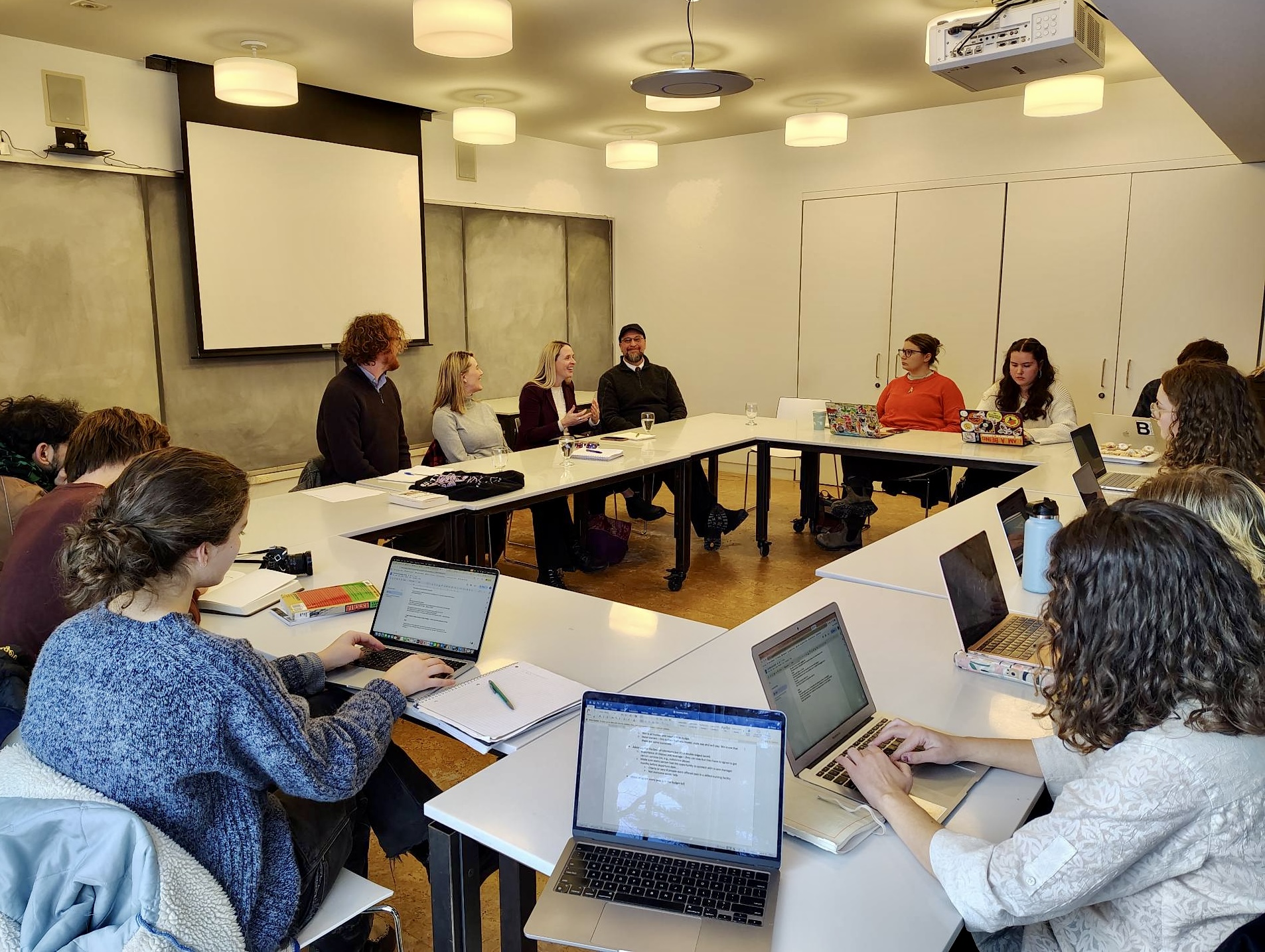
Deputy Secretary McClure said AHS is pursuing “a menu of options rather than a single solution.” McClure described how the state was making it easier for private developers to build new homes while also expanding the shelter system and opening warming huts in cold weather. McClure also bemoaned how many grocery workers, daycare workers, janitors, and others working fulltime in Vermont “are not making enough money to afford fair market rent, which is extremely unfortunate.” McClure added: “But we would love your thoughts. Please help us solve this really big problem.”
Jacqueline Walsh ’26 asked, “If a public school teacher or someone working full-time at Hannaford can't afford housing, then isn’t there something bigger that we need to talk about?”
Deputy Commissioner Grey jumped in to explain a new housing solution the Agency of Human Services is advocating for, a solution she calls “natural support systems.” Grey described how the homeless in Vermont may need to rely on their personal networks this winter. “Do you have family or friends that can help support you? Maybe you need to reconcile with your family or mend your family relations. Because that might be a more likely path for you to secure housing.”
Deputy Commissioner Grey continued, “And maybe it’s two families that can find a small apartment together. And together, they can afford it. If the end goal of each family is their own affordable apartment, it’s going to feel rather hopeless.”
Nora Dyer-Murphy ’28 asked if the State of Vermont is considering new investments in public housing to address the housing crisis.
Public housing “would be a unique model for us,” said Deputy Secretary McClure, adding that “Vermont is not looking to become more of a landlord.”
Deputy Secretary McClure reflected that the State of Vermont has spent a quarter of a billion dollars on emergency housing since COVID. “We did the math,” McClure noted, “and we could have housed every single homeless person had we built new units with that money.”