Learning by Doing
National Book Award Finalist Claudia Rowe ’88 on Bennington, Journalism, and the Foster Care Machine.
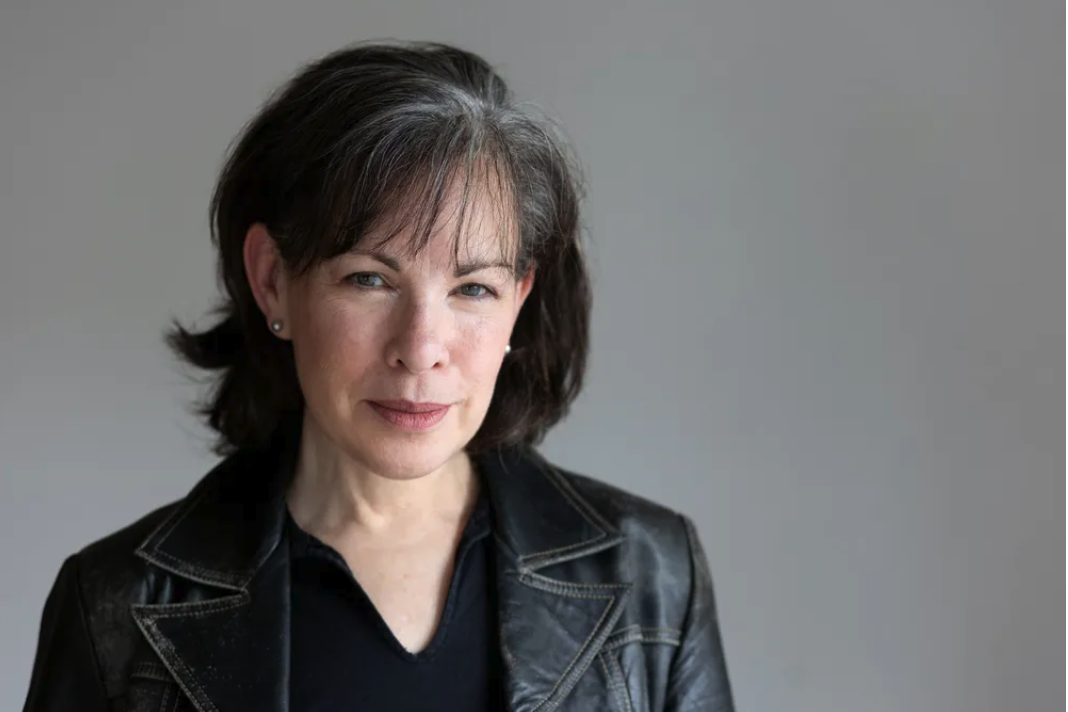
We caught up with Claudia Rowe ’88, author of Wards of the State: The Long Shadow of American Foster Care, which was shortlisted for the 2025 National Book Award for nonfiction. Rowe’s work has received many awards, including a Casey Medal for Meritorious Journalism and a Washington State Book Award for memoir. Her work has been twice nominated for the Pulitzer Prize in journalism and has appeared in The New York Times, The Seattle Times, Mother Jones, and The Stranger. She is currently a member of the editorial board at The Seattle Times.
How did you first hear about Bennington?
I’d gone to an old-fashioned prep school, where I took Latin, followed a dress code, the whole deal. I did okay academically, but it was my mom who realized I really needed something different. She had gone to Smith College, so she knew about Bennington. I certainly didn't. There was not much of a pipeline from my highly traditional high school to highly untraditional Bennington.
After that super traditional high school experience, how did Bennington feel?
The freedom was fantastic. So much about Bennington comes from the chemistry of the people who are there when you are. It’s small enough that the energy and the interests of our fellow students really inform your experience. And the people who were there in the mid- and late eighties, when I was there, were just incredibly creative. That includes the faculty. [Former faculty members] Edward Hoagland, Arturo Vivante, and Pat Adams were central to my experience and definitely influenced the direction of my life.
What is the most important thing you learned at Bennington?
When I graduated in 1988, I didn't have clear ideas about what I wanted to do, except one: I wanted to support myself as a writer. That was it, my only aspiration. Bennington gave me confidence to pursue writing as a career. You must have the confidence to even attempt something like that, and Bennington instilled this belief that it was possible. A lot of other schools and maybe a lot of other families would have discouraged this. But that belief in yourself is essential, fundamental to being able to build any kind of creative career. That's the most important legacy I got from Bennington.
How did you get from Bennington to journalism?
When I was a student, Bennington was all about the value of exploration. There was this belief in the virtue of experience. That learn-by-doing attitude is essential to being a journalist. In many ways, being a reporter is purely “learn by doing:" being on the ground, immersed in whatever topic or controversy, and figuring it out on the fly. Bennington gave me practice with that, which can be an uncomfortable experience, throwing yourself into a situation and figuring it out as you go.
How did this most recent book, Wards of the State, begin?
Early in my career, I had been interested in crime. I wanted to know, where does it come from? How do you become that person who commits a crime? An editor at my first newspaper said, ‘You want to know why people do what they do? You should be looking in the schools, covering education.’ I resisted—the idea of spending more time in school was not on my bingo card!—but he was right. So that's how education became the underpinning of my whole career. Juvenile justice and child welfare followed naturally, as other areas where the government intersects powerfully with the lives of young people.
Then, in 2019, I was sitting in a courtroom, watching this teenage girl being sentenced for murder, and I saw 30 years of my reporting reflected in this girl's story. My question was, could flaws in the design of the foster care system be somehow feeding prisons and homelessness? And that's what I wanted to explore through the book.
How did you discover that the book was longlisted for the National Book Award?
What people may not know is that publishers don't always talk to you about what they’re going to do with your book. So my editor at Abrams entered it, and I had no idea. I opened up my computer one September morning, and I saw this email from a bookseller in Seattle. It said ‘bravo on the NBA!’ My son is a highly competitive high school basketball player. So I thought I was being spammed about him being in the league! But, no. It was my bookseller-friend who’d been reading the wires, and he knew that the longlist had come out. I hadn’t known about the book being submitted. I didn't know it was under consideration. I didn't know anything. It was not on my radar at all. So, it was an amazing shock.
What does it mean for it to have been included on the longlist and then the shortlist?
I was so gratified, not only for the endorsement of the book’s quality, but also the recognition of foster care, which is largely invisible unless you are in it. So to have the National Book Foundation recognize Wards of the State felt like the system—and the kids in it—was suddenly much more visible.
What is your hope for the book?
What I hope Wards of the State makes clear for readers is that there's no villain, per se. The problem is not abusive foster parents or bad social workers. It's the system itself, a kind of faceless, mechanized brutality. The system does abuse kids, but not intentionally. It's simply the experience of moving from home to home to home, which is part of the structure of foster care, that has a detrimental effect on kids' development. So it's not bad administrators screwing over kids, though, of course, that happens. It's the structure of the system that is creating these outcomes. That's what I hope the book is showing.
Do you anticipate change?
I'm a writer, not an advocate in the traditional sense, so I'm not saying ‘do this or do that,’ but I do hope that the book inspires people to look more closely. It’s getting some traction with change makers, like legislators and policy people. But it's not written for them. It’s aimed at general-interest readers. I wanted to make this a compelling read, rather than a report full of stats. I want it to feel as deep and immersive and propulsive as a novel because it needs to reach everyone. Change doesn't happen without public pressure, so it’s regular people who need to reach out to legislators and lawmakers and policy folks. I think that is starting to happen.