A Dance Toward Something More
How Transfer Student Sophie Locke ’26 Found Her Creative Home
Before coming to Bennington, Sophie Locke ’26 spent years in highly structured dance environments—first at a boarding school for the performing arts outside of Boston, then at Boston Conservatory, where she pursued a BFA in dance. She loved it. The dance training was exceptional, and she was surrounded by peers who shared her seriousness about the art. But eventually, something began to shift.
She was enrolled in academic dance courses and lecture courses like dance history, experimental anatomy, and music foundations for dancers.
“We did discuss and analyze how invasions/war, colonization, migration, and class/castes brought us to dance here today," said Locke. "It's crucial to understand our history and dance's evolution societally.”
Due to very limited time, she could take only two non-dance-related classes per term. As Locke immersed herself in those few classes, she realized how much she missed that aspect of her education.
“Those classes were making me so happy. And I was just missing stuff,” she recalled. “I was missing having a campus. I was missing living with my friends.”
She began to crave a fuller, more integrated experience that reflected how she saw herself: not just a dancer, but also as a thinker and a collaborator. That’s when she started seriously looking into Bennington, encouraged by a friend and fellow dancer from her boarding school who had also made the leap.
Transferring at the end of her sophomore year was a “bold and scary change,” but she knew she needed to make it. At Bennington, she could continue to grow as a dancer, while finally giving equal space to her academic interests.
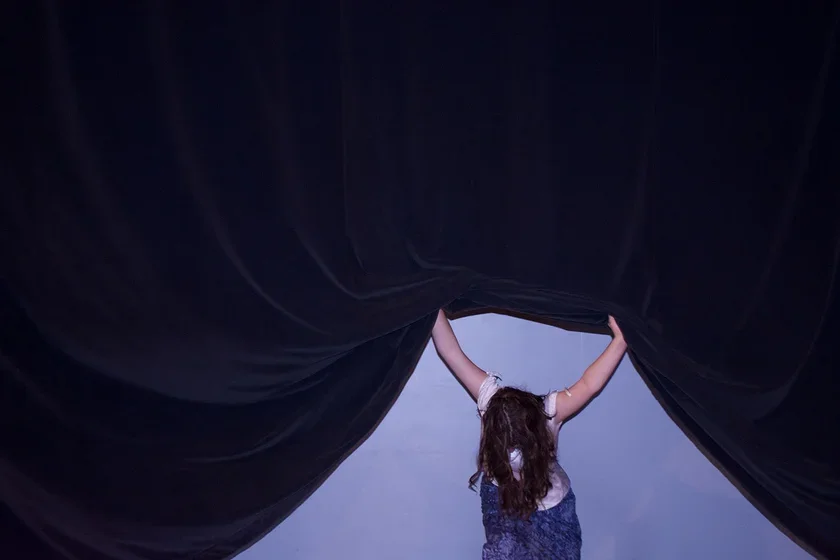
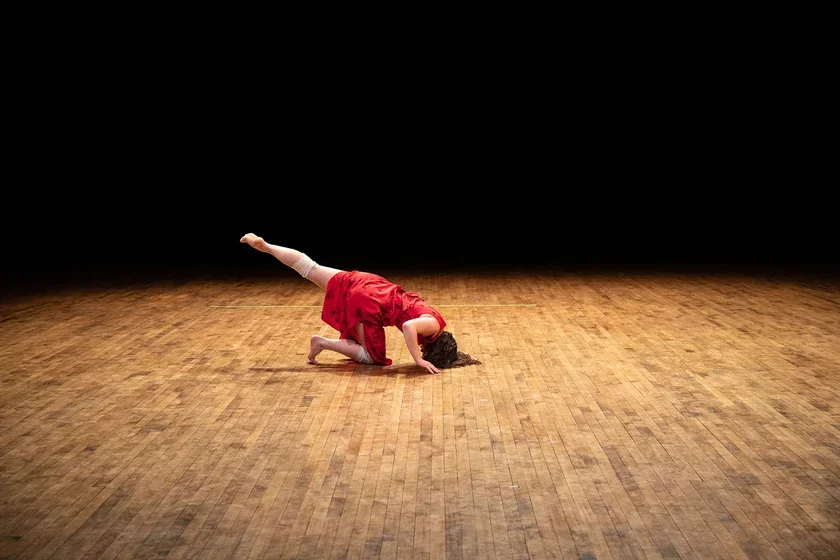
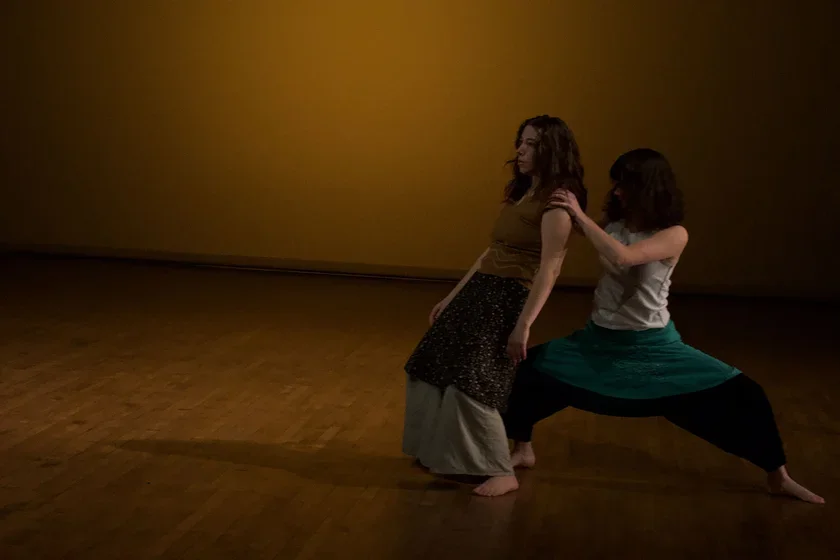
Those interests are expansive. Photography has become a central part of her studies. She especially enjoys the classroom dynamic, where students critique each other’s work.
“You’re learning about the ethics of photography and all of the history… and what your position is when you’re creating. What your intention is. It’s so valuable,” she said.
She’s also immersed herself in anthropology and human rights. One particularly formative course on reproductive justice in Latin America was “transformative and difficult and challenging,” but deeply rewarding.
At Bennington, she’s able to be “a dancer and a photographer and a historian” all at once.
During her first Field Work Term, she worked as a research assistant with Bennington’s low-residency MFA in Dance program in Montpellier, France, a coastal city that became the backdrop for one of her most inspiring educational experiences. There, she took movement classes alongside MFA students and visiting faculty, supported guest artists, and attended nearly every show at the Montpellier Dance Festival. She sat in on the MFA's academic/critical theory courses too.
One of the most powerful parts of the residency was the week-long “study cycle,” where artists and scholars from around the world presented daily lectures on topics like diaspora, displacement, and political engagement in the arts.
“I was inspired to see just these wonderful, invigorated people who are doing jobs that I can see as my own job, making a career out of exactly what I love,” said Locke.
She worked closely with MFA students, too, one of whom, based in San Francisco, later helped her make professional connections on the West Coast. She’s now exploring career opportunities in and around the city and is staying open to other possibilities in that creative community. This Field Work Term, Locke is working as an intern for PuSh International Performing Arts Festival in Vancouver, BC, Canada.
“It has been absolutely incredible! The first show of the festival is this Thursday,” said Locke.
When she is back on campus, Locke throws herself fully into everything: choreography, academic coursework, creative collaboration. “I definitely try to make the most of my time here,” she said.
“I take a lot of credits each term. I love to be busy. I’ve been busy my whole life.”
Bennington has become the place where her many interests can coexist and cross-pollinate. She’s still a dancer, but she’s also a researcher, an artist, a collaborator.
“It’s nice to not have to create in the way that maybe people are expecting you to create,” she said. “I felt ready to do my own work and to study how I wanted to study. And I’m lucky to have faculty members here who are just as excited about that as I am."