$7.9 Million NSF Investment Brings Vermont Researchers Together to Address ‘Forever Chemical’ Contamination
The four-year NSF EPSCoR Research Incubators for STEM Excellence (E-RISE) award will establish collaboration across Bennington College, Middlebury College, the University of Vermont (UVM), and Landmark College to develop actionable understanding of how per- and polyfluoroalkyl substances (PFAS) move through water systems and into the food web.
The U.S. National Science Foundation has awarded $7.9 million to establish the PFAS Environmental Research Network (PERN), a four-year initiative bringing together Vermont researchers, educators, students, and state partners to better understand and address environmental chemical contamination. Known as “forever chemicals,” PFAS are a persistent group of synthetic compounds used for decades in industrial applications and consumer products that move through groundwater, ecosystems, and communities, creating challenges for environmental management and public health.
“I have been working on the PFAS contamination problem with students at Bennington College since its discovery in southwestern Vermont in 2016,” said Tim Schroeder, Bennington College faculty member in Geology and the leader of the project. “The most common questions I am asked now by residents are related to how these chemicals move through the natural food web. For the first time, this project will let us begin to meaningfully address those questions. Our goal is to provide real data so Vermonters can make informed decisions and to provide a framework for other communities across the country to address forever chemicals.”
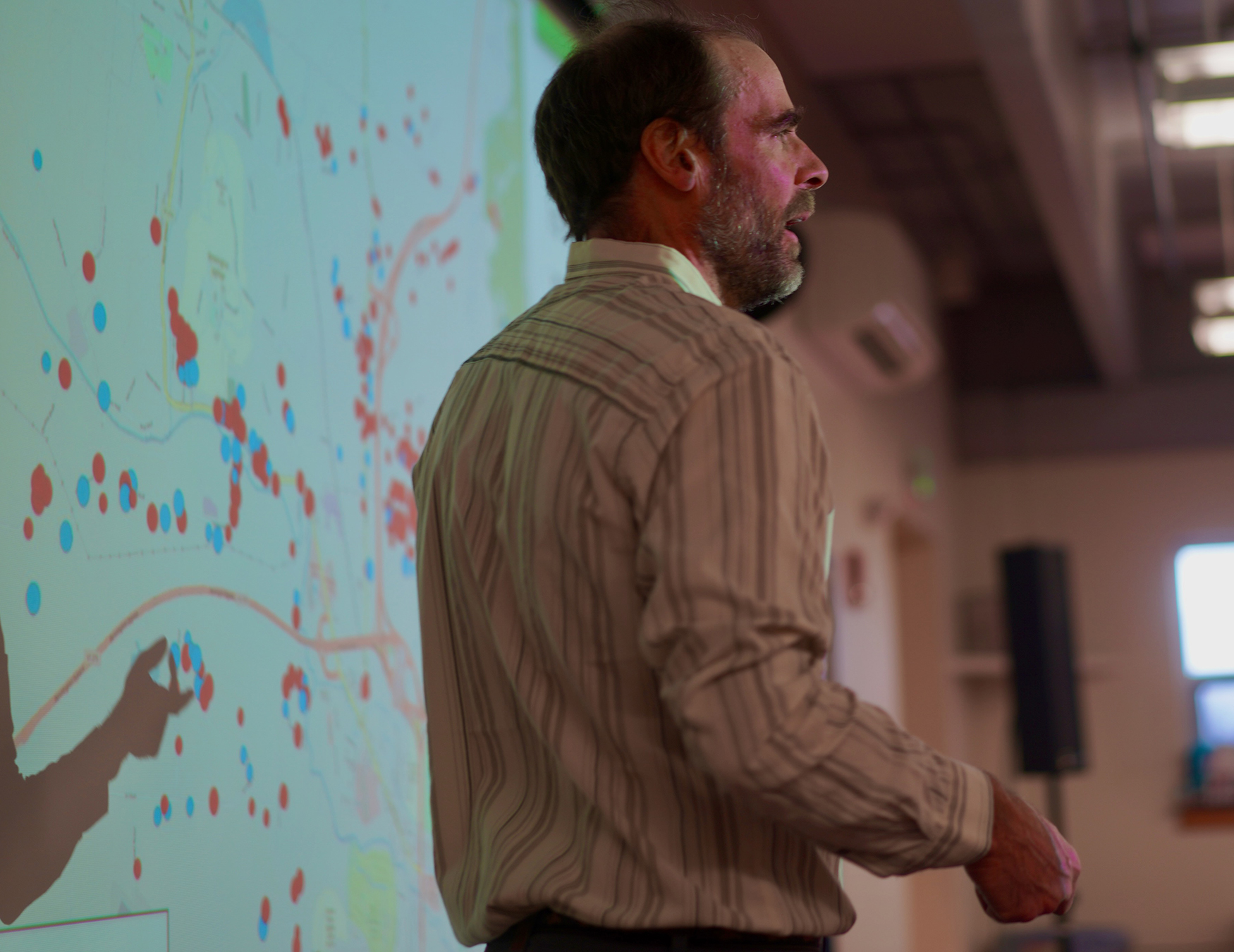
PERN will bring together expertise in Geology, Biology, Chemistry, Data Science, Environmental Health, and Social Sciences to develop a more comprehensive understanding of how PFAS move through Vermont’s environment, accumulate in living systems, and affect human health.
Led by Bennington College, the network will connect researchers across Vermont institutions with state agencies, including the Department of Environmental Conservation, the Department of Health and the Vermont Agricultural and Environmental Laboratory, to strengthen Vermont’s PFAS laboratory system, in alignment with the state’s Science and Technology Plan.
Together, partners will develop research, data, and educational tools designed to generate actionable knowledge that can support data-driven PFAS management and regulation while strengthening Vermont’s research capacity and STEM workforce. Each institution will receive the bulk of the total funds—$4.8 million for Bennington College, $2.0 million for Middlebury College, $950,000 million for UVM, and $138,000 for Landmark College—for the first 3 years of the grant immediately. A small amount of each allocation will be distributed for the fourth year based on successful completion of tasks and reporting.
PFAS contamination is a complex environmental challenge that no single institution or discipline can address alone. This collaborative effort strengthens the research capacity of Vermont’s smaller, rural institutions and further strengthens the state’s research infrastructure.
"As an advocacy group, the Vermont PFAS Coalition knows that the best scientific research contributes to our efforts to advocate for effective policies and better solutions to the problems that 'forever chemicals' pose to our environment and health,” said Marguerite Adelman, founder of the Vermont PFAS Coalition. “We are thrilled that Bennington College is leading this worthy venture and will provide all Vermonters with a more rigorous understanding of the plague of PFAS."
Bennington College faculty and students have been at the forefront of PFOA and PFAS research since its discovery locally. They have worked collaboratively alongside communities in the region, the Environmental Protection Agency, the Department of Environmental Conservation, and scientists from other colleges, especially Pete Ryan at Middlebury College, to investigate the impacts on the water supply and public health and to provide information that has shaped public policy. This new work, which includes principal investigators Denise Burchsted from Landmark College and Kristen Underwood at University of Vermont, expands the effort to include more colleges and to investigate the chemicals’ impact on the ecosystem.
PERN builds on growing momentum of smaller institution-led multimillion-dollar federal funding awards, including the 2025 NSF STRIVE award (#2438168) led by Landmark College with collaborator Bennington College, and represents another step toward developing a more connected, collaborative, and competitive research ecosystem across Vermont.
Beyond making the state more competitive in federal research funding, this research will address a pressing challenge affecting the health of Vermonters and the state’s ecosystems.
Used in industrial applications and consumer products such as non-stick cookware, chemicals classified as PFAS encompass an estimated 15,000 synthetic compounds, with most of the U.S. population having detectable amounts in their bloodstream.
While regulation has zeroed in on drinking water contamination, food consumption has been shown to be a primary route of exposure (DeSilva et al., 2021). With a strong culture of hunting and foraging, Vermonters’ susceptibility is unknown, as few studies have investigated PFAS bioaccumulation in a terrestrial setting.
By understanding the lingering threat of contamination through both living and nonliving elements of Vermont’s ecosystems, PERN will work to assess the threat while creating channels of understanding to inform policy locally, statewide, and wherever PFAS has contaminated the environment.
“We all deserve answers about how PFAS contamination is affecting our water, food, and environment, and I’m proud to see Vermont institutions coming together to tackle that challenge head on,” said Representative Becca Balint (VT-AL). "This is exactly the kind of research and collaboration that federal investments should support: bringing our world-class colleges, students, scientists, and state partners together to solve a problem that affects communities here at home and across the country."
For ongoing updates and more information about the initiative, please visit https://www.bennington.edu/pfas.