Tim Daly ’79 is Keeping the Feather in the Air

Bennington College caught up with Tim Daly ’79 on October 19, days before the premier of his new show Newlyweds on NBC. Daly stars alongside his real-life wife Téa Leoni.
I'm so excited that you have a new show coming out, Newlyweds on NBC. How do you describe this project?
It's an old-fashioned four-camera live-audience sitcom. I came to it because Téa and I had done Madam Secretary together for six years. It was all about very intense geopolitical challenges. And after COVID, we thought we should do a comedy together. We actually started developing something that we thought was a great idea. And then there was the writers strike, and it sort of dissipated.
And then this came to us. It was developed by Jaime Lee Curtis and her partner Gail Lerner. They pitched it to NBC, and NBC loved the idea, but they wanted to make sure that they had the right cast. They thought of Téa and me because we're both versed in comedy and in this particular medium, so they came to us with it. We were like, "Oh my gosh, this is it!" It was ironic because it's called Newlyweds, and we were newlyweds at the time. So it seemed kind of perfect.
What do you like most about the day-to-day work of a television show?
I think it's the same as the day-to-day work of being an actor. You spend every day trying to solve a problem. You're trying to understand the story that you're going to tell, figuring out the best way to tell it, and figuring out if it makes sense given the whole of the script. It's like wonderful detective work, and I find it thrilling. Sometimes it happens at the spur of the moment. You get some divine dispensation and do something that no one would expect, and that's exciting too.
You’ve done theater, television, film…. What are the differences you notice most?
I'm a theater kid. The thing about doing theater professionally is that it's fabulous, but the schedule can get oppressive. It can be months of people saying, "We're going away this weekend. Why don't you come? I can't. I'm going out to dinner. You want to come? I can't." No matter how wonderful the play is or how important it might be, it gets oppressive to have that schedule.The great thing about situation comedy is that the schedule is much easier, but you still get that experience of being in a room with strangers and that incredible special energy that's exchanged between audience and performers. It all happens in a compressed period of time. The audience gets to see not only the performance, but also how the performance is constructed. It's exciting and hairy, but it is that process of discovery. It's just your imagination and your intellect and your emotions and whatever comes to you from the ether… telling people stories.
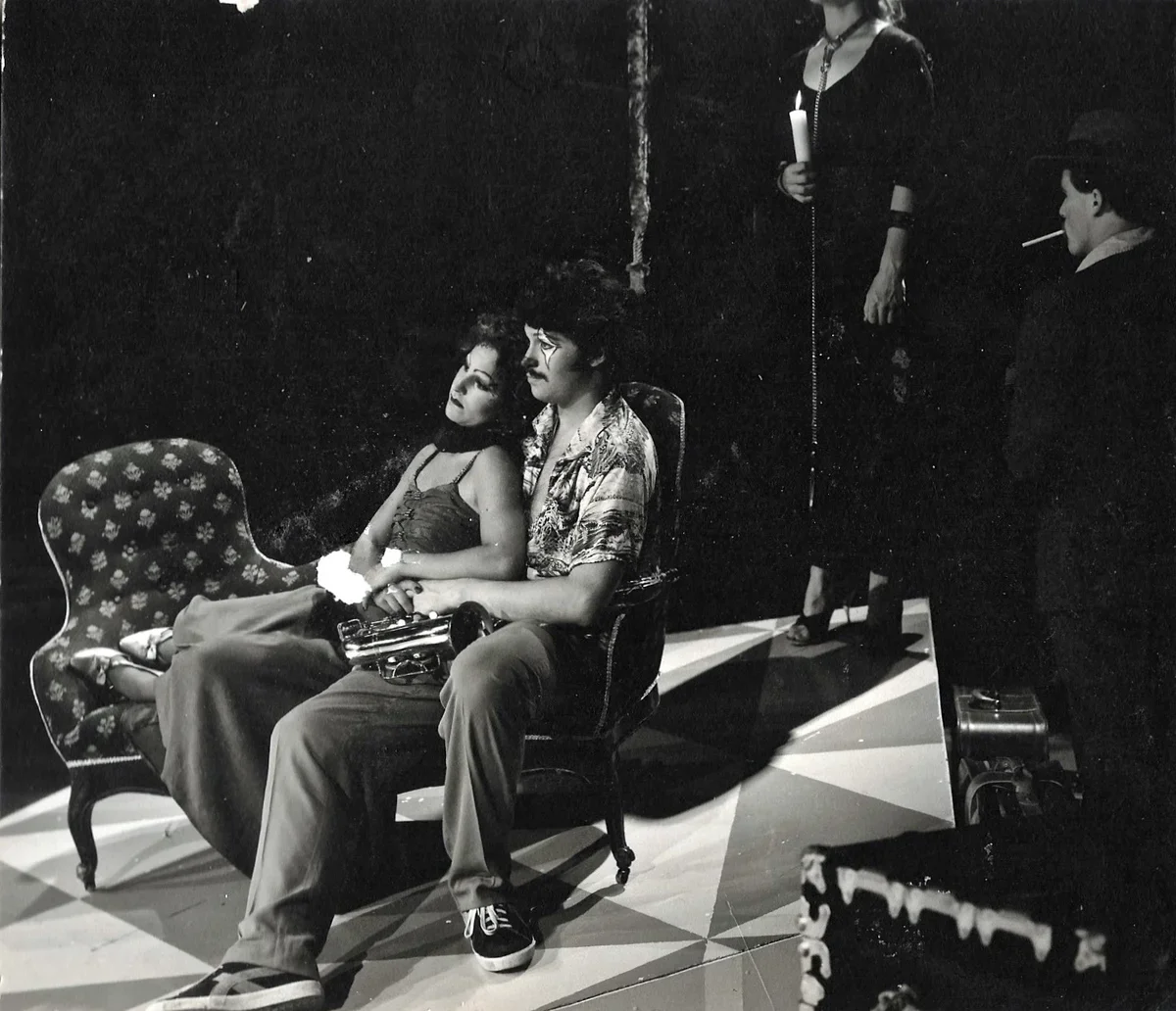
What's one thing about the work that would likely surprise students or alumni?
They might be surprised at the amount of spontaneity coupled with concentration it takes. There are writers running in with a new joke for you, sometimes with an almost completely restructured scene. And you have to learn it and perform it on the spot. It's a unique skill. Most of the time you want more time to incorporate what you're doing and to get it into your nervous system. But the sitcom is interesting. The jokes have a short shelf life. The more spontaneous it seems, or is, the better it works. It's like trying to keep a feather in the air. If you blow it gently, it'll float. If you grab it, it’ll just sink to the ground.
Being an actor is great for critical thinking too. It's the only thing I know that directly teaches empathy and compassion because you literally have to walk in someone else's shoes. You have to use your imagination and your body and your intellect to figure out what it would be like to someone else. And I think that's missing from a lot of areas of our culture right now.
I can tell that’s really important to you.
It is. I'm the president of the Creative Coalition. It’s an arts advocacy organization that's been around for 37 years. I've been the president of it for more than 15. We spend a lot of time advocating for arts education and public funding for the arts. We've saved the National Endowment for the Arts at least a dozen times because every year a budget comes out where it's zeroed out. I'm very proud of my work with that organization.
In 2008, I was at the White House, and I was invited to this small group of 20 people because the Obama administration had just taken over during this big push for STEM education. In this meeting they're saying “STEM, STEM, STEM, STEM, STEM.” I stood up and I said, "I'm sorry. First of all, it's a terrible acronym. Sounds like stem cell research or a florist convention. Where are the arts? Where’s the A? It's STEAM. STEAM is a better acronym, and it's a better representation of what puts technology into human context. That's what artists are for, to find humanity, even in technology.”
I coined the term STEAM. I'm proud of that, and I want people to know that I did. Now there’s a congressional STEAM caucus. There's also language in the federal education policy that provides direction for school boards.
I am trying to change the narrative about arts in this country because we always see them as a luxury item or something that's expendable. It’s the first thing we give up, and that’s a big, big mistake. Children who have a full curriculum in the arts are three-times more likely to graduate from high school. If I could get this message to parents around the country, to get them to embrace that, then the National Endowment for the Arts would quadruple, and people would realize that it's important.
If kids are three-times more likely to graduate from high school, think about the relief that would give to the welfare system, the criminal justice system, the healthcare system, because if you have not graduated from high school, you are more likely to need government help. But why not start at the front end?
That’s such a powerful idea.
How has attending Bennington influenced your career or your service?
I found that I was the perfect person for Bennington because I had taken two years off before I got to college. I had a lot of blue-collar jobs, traveled around the country a lot. So when I arrived, I was hungry. I knew what I wanted, and I went for it hard. I essentially got everything I wanted.
I remember playing in a rock and roll band, and we would set up our stuff and play at 1:00 am. If I wanted to make pottery, I would go and make pottery. And there was great literature. I think that maybe if I saw myself, I would say, “what an asshole. He's gobbling everything up.” But that's what I did, and that was important to me. I think it set me up for a creative life. I can build things. I can make art. I can make music. I can do my profession. Bennington supercharged my creativity.
What would you like students now to know?
I want students to know the importance of public service in the arts. We're adept at wanting to tear everything down. Let’s not forget to offer the alternative, a better way to build something back