Connecting the Dots
Two Bennington Alumni Reimagine Global Health After Trump’s Cuts to USAID.
In January 2025, Eric Ramirez-Ferrero ’85 watched colleagues disappear.
“One day their profiles were on the website,” he recalled. “The next day, they were gone.”
For 35 years, Ramirez-Ferrero had built a career in domestic and international public health with the U.S. Agency for International Development (USAID). That interest was sparked in a medical anthropology tutorial with Bennington College faculty member Joanna Kirkpatrick.
“Medical anthropology brought my interests in health and culture together," he said. “That was the first time the idea of a career in international health was planted.”
Oklahoma to Bennington to East Africa to Washington
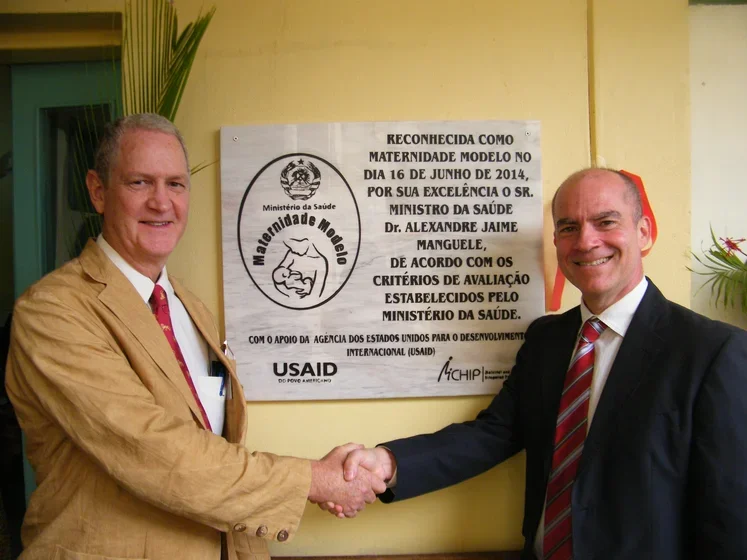
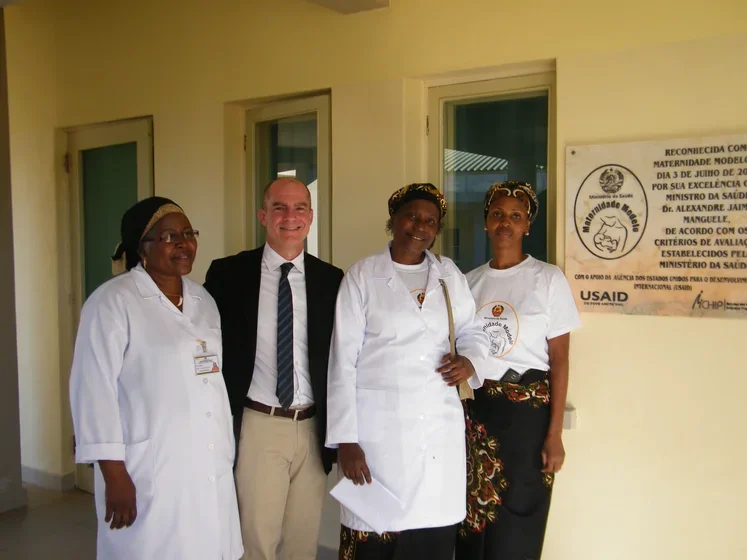
His career stretched to a Ph.D. in anthropology at Stanford just after Bennington. His dissertation, which became a book, was on farmer suicides in Oklahoma, where he’s from. After the Ph.D., he applied to jobs in international development but found that he couldn’t get hired without more international experience, so he returned to school for a master’s in public health. A USAID leadership program for public health professionals without international experience at the University of Michigan, placed him in a reproductive health and HIV prevention project in Tanzania for two and a half years; he stayed for seven. Four years in Mozambique followed, where he led maternal and child health initiatives.
After 15 years abroad, he returned to the United States as a technical director on global maternal and child health projects funded through USAID, where he worked for nearly 20 years.
Working on population-level public health projects left him craving the one-on-one human connection at the root of all successful public health projects. He had been quietly preparing for a career pivot, even before Trump’s cuts to USAID became apparent. He had begun applying to social work programs with a vision to serve as a social worker as a “retirement career.”
By late January, after President Donald Trump began dismantling the foreign aid infrastructure, Ramirez-Ferrero could “see the handwriting on the wall.” Projects vanished. Staff were laid off in widening circles. He was told his last day would be February 21, 2025.
“It moved fast,” he said. With the next phase of his career already in the works, Ramirez-Ferrero simply asked the colleges where he had applied to switch his application from part-time to full. “The cuts simply accelerated the timeline.”
This past fall, at 61, he enrolled full-time in the Master of Social Service program at Bryn Mawr College’s Graduate School of Social Work and Social Research. He chose Bryn Mawr over offers from the University of Chicago and Washington University in St. Louis because he was drawn to its small scale and personal attention. “Bryn Mawr warmly reminded me of Bennington,” he said. Now attending full-time while completing an annual practicum, he plans to graduate in 2027.
Ramirez-Ferrero plans to work as a clinical social worker in the United States or return to work abroad, especially with people in “fragile zones,” where war or disaster causes widespread trauma and there are no mental healthcare professionals available. “If international development rises from the ashes,” he said, “I’d like to bring clinical skills in trauma-informed mental health to those settings.”
Bennington, he said, instilled that audacity. “We graduated with the sense that we can do anything. I sometimes have to remind myself of that brave person I used to be, and apparently still am.”
Making Healthcare Work for Everyone in a New Way
Thousands of miles away, another Bennington alum, Kachina Chawla ’99, was also watching her life’s work unravel.
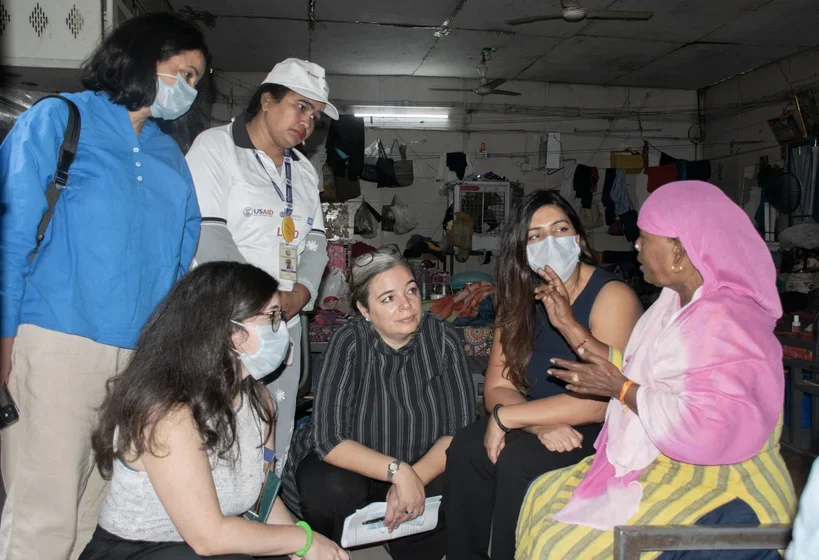
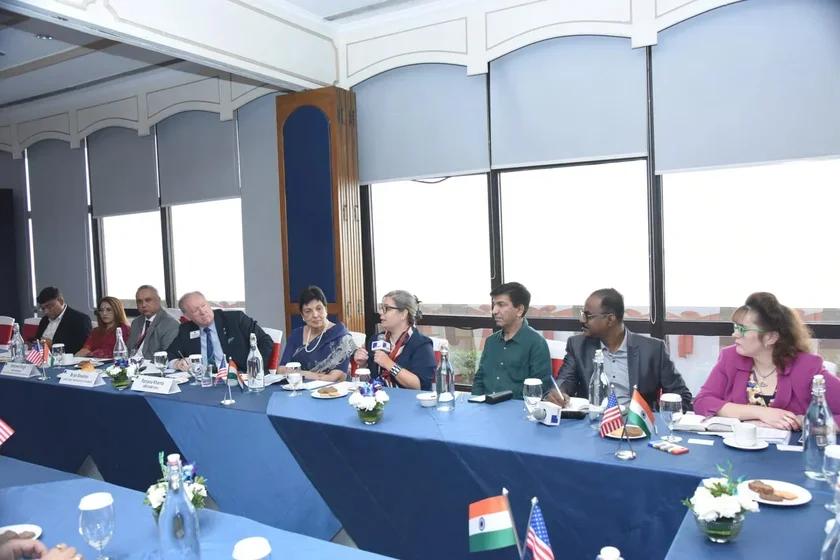
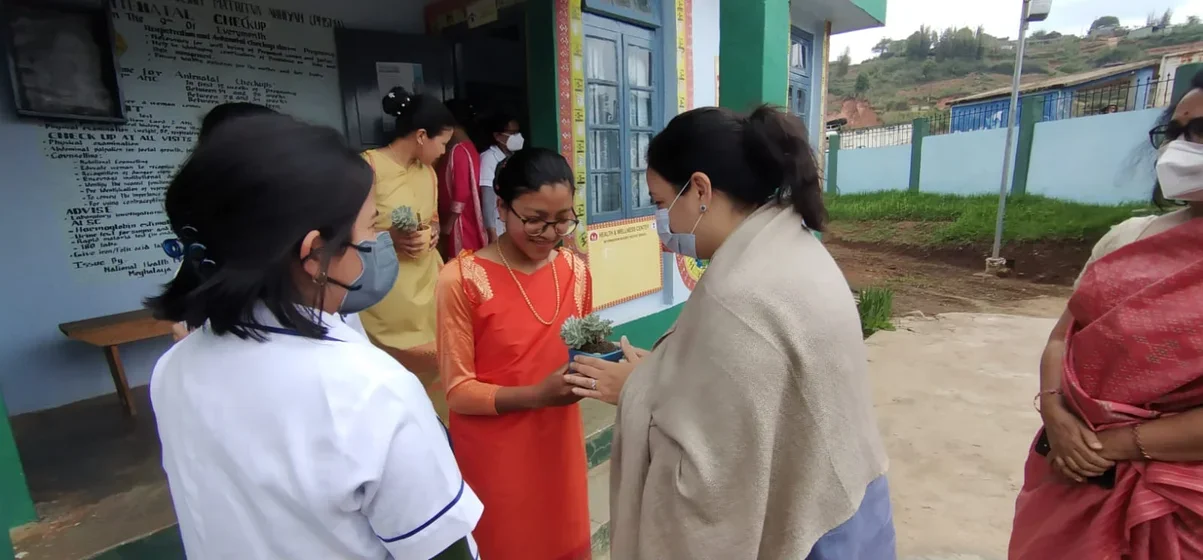
As a health systems strengthening division chief for USAID/India, she had spent seven years building programs focused on equity, reducing out-of-pocket health expenditures for the poor, addressing gender disparities, and helping India’s sprawling health system adapt to climate stressors.
“We helped the Government of India ensure its health system worked for everyone, asking who was being left out and what could we do to give them timely access to quality healthcare,” Chawla said. Her last day was July 1, 2025. Despite having been given notice in March, it still came as a shock.
“The thing about working with the U.S. government is that you're used to political fluctuation. You're told that a reduction in force is coming. At the same time, you're being asked, ‘Can you draw up plans for expansion of global health security?’ So we had these little drops of hope that continued to come while all the despair was setting in, especially in health. We had some projects that were canceled whilst others were being preserved. And so you think to yourself, ‘Well, they're going need people to run the ones that they are keeping….’”
Beyond the mixed messages, Chawla and her colleagues endured name calling and accusations of fraud. Elon Musk said that the agency was not an apple with a worm in it, but “a ball of worms.” He publicly alleged that $21 million in USAID funds had interfered in Indian elections. The political fallout was swift. India’s government blacklisted USAID. Parliamentary inquiries followed. The team knew that no such money had come to India, but contradicting the administration as a public servant was not an option.
“It was a double whammy,” she said. “Your host government doesn’t want you here and your government (the U.S.) says it doesn’t need or value you or the work you do. It was traumatizing.”
Connecting the Dots
But like Ramirez-Ferrero, Chawla did not despair or wait for instructions. Between the notice and her termination, and inspired by her own mother’s dementia diagnosis, Chawla began researching home-based care models in India, where multigenerational families, rather than nursing homes, shoulder responsibility for care and where hospital visits can be chaotic and traumatic for elders. The deeper she looked, the more she saw gaps not only in medical care, but in cognitive and emotional support for elders and their family caregivers.
“Development economics often prioritizes youth, productivity, and return on investment,” said Chawla. “Elder care is entirely overlooked, yet it is a major area of need in India.”
With the multidisciplinary education Chawla received at Bennington, she began collaborating with neuroscientists, music therapists, artists, and technologists, including teams in Brazil and Canada. She points to organizations like Room 217 Foundation, which curates therapeutic playlists calibrated to heart rates, and startups developing AI tools that can predict agitation in dementia patients 17 minutes before it escalates. There were so many tools that in the hands of caregivers could significantly alter the experience of someone living with dementia and their loved ones.
Out of that research, Chawla founded Lighthouse Health Solutions and expanded into aging. Its first “employee” was an AI agent named Lumi. In addition to her and her partners, the company now has two additional full-time human employees and a network for 17 consultants (many of whom also lost their jobs with USAID’s closure).
Lighthouse Health Solutions is working with the underemployed youth population across India to uncover new ideas to enable aging with agency. It is launching a “grand challenge,” which will provide young entrepreneurs who identify solutions in cognitive and emotional care for elders with access to capital and connections they need to build their capacity to expand. Lighthouse aims to incubate two or three promising solutions.
“What Bennington taught me is how to connect the dots,” she said. “Venture capital, youth unemployment, art, and technology…. That ability to transcend fields is Bennington’s influence.”
Ramirez-Ferrero reflected, “Bennington students seem to absorb an unusual confidence from the environment. It is in the College's DNA: ‘If I can imagine it, I can do it.’ I am so grateful that has stuck with me."