Creative, Subtle, Intuitive Sculpture
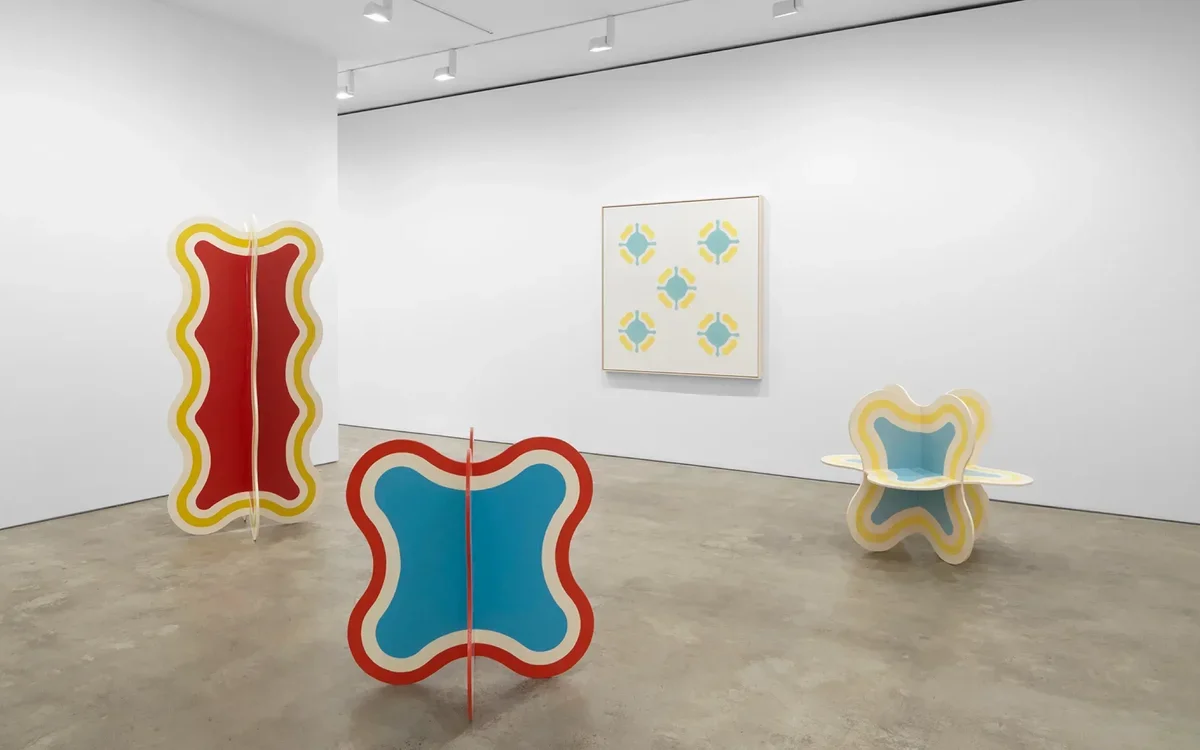
Former faculty member Paul Feeley's sculptural works are on view in Paul Feeley: The Shape of Things at New York City's Garth Greenan Gallery through Saturday, October 25. The Brooklyn Rail highlighted the exhibition.
Writes Alex Grimley in the Brooklyn Rail:
"I once asked a friend, a specialist in French art, why the Barbizon painter Théodore Rousseau, whose imposing masterpiece Forest in Winter at Sunset (ca. 1846–67) remains perpetually on view at the Metropolitan Museum, doesn’t get his art historical due? Sandwiched between Romanticism and realism, he explained, Rousseau is an artist whose legacy is to be 'rediscovered' every twenty years or so. A similar fate seems to have befallen Paul Feeley, painter, sculptor, and longtime head of Bennington College’s storied art department. Most discussions of Feeley place him in the coterie of artists associated with Clement Greenberg, himself a mainstay at Bennington during the 1960s, only to then describe how his work departs from that critic’s 'formalist dogma.' (How dogmatic was formalist dogma, though, if Kenneth Noland was painting on shaped canvases by 1966 and Jules Olitski executed a couple dozen flamboyantly colored sculptures two years later?)
"The Shape of Things, currently on view at Garth Greenan Gallery, demonstrates why Feeley’s art deserves a more expansive context than that of an aberrant formalist. The continuity of thought evident among the exhibited paintings, drawings, sketches, and sculptures shows Feeley to have more in common with the polymath Tony Smith, who taught alongside Feeley at Bennington beginning in the late 1950s, than with the college’s 'Green Mountain Boys': Noland, Olitski, and sculptor Anthony Caro. Like Smith, Feeley followed an idiosyncratic path. Born in 1910, the same year as Franz Kline, he belonged to an older generation but developed the work for which he is best known in the context of a subsequent, younger group."