
Purple Carrot Farm
History
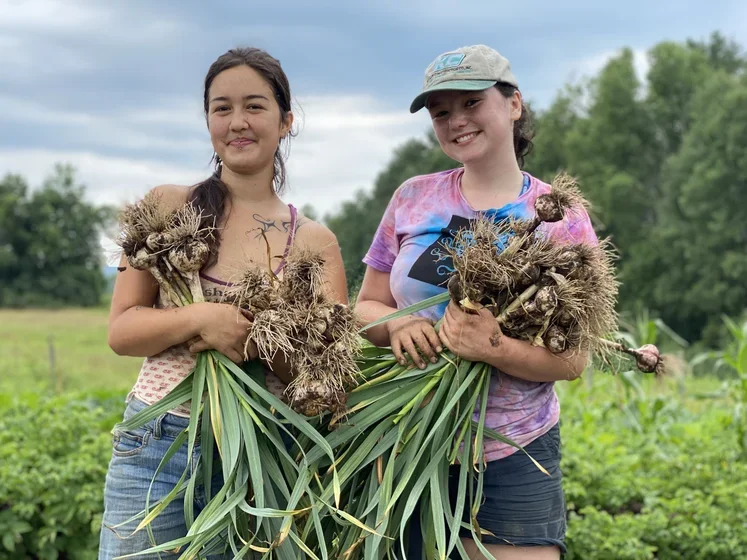
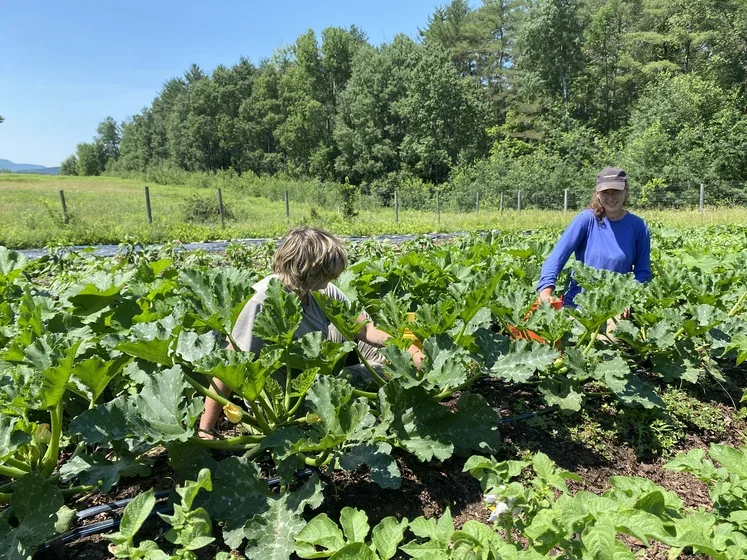
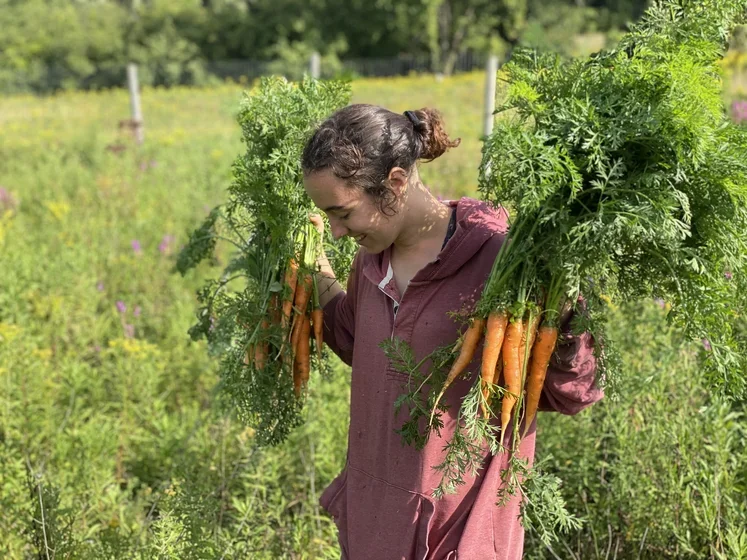
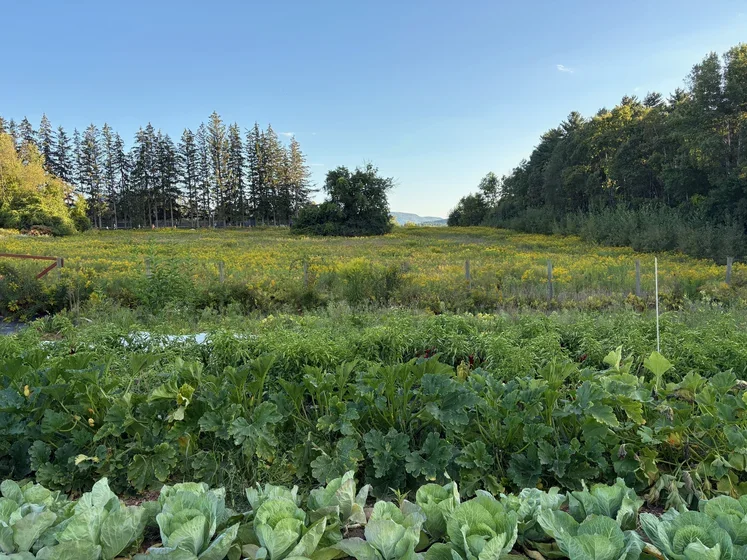
The Purple Carrot Farm has existed in many forms at the College. In the mid 1900s, it served as a victory garden, and students were required to work on the farm during food shortages. More recently, it is a no-till 1.2 acre farm employing regenerative agriculture techniques and practices while taking an experimental student-inspired approach to small scale agriculture. Produce is sold to the College's Dining Service to be incorporated into the meals prepared for the Dining Hall year around.
In 2023, The Purple Carrot Farm joined as partner of the Bennington Fair Food Initiative, a grant funded by U.S. Department of Housing and Urban Development (HUD). The Bennington Fair Food Initiative grant has supported the expansion of the Purple Carrot Farm, increasing food production by 700% over three years while creating curriculum in sustainable agriculture, advancing student-designed projects, and deepening connections to local food systems. Through this investment, the farm has become a living classroom, a hub for experiential learning, and a model for resilient, community-centered food production.
Courses offered to Bennington College students explore the design and management of agricultural systems that support ecological health and community resilience. Through readings, discussion, field trips, and presentations, students examine farming as a critical component of local food security. Hands-on work at the Purple Carrot Farm provides practical training in food cultivation, propagation, preservation, and processing, as well as the design of annual and perennial production systems.
Students engage with a wide cross-section of the local food system through visits to regional farms and organizations, including organic vegetable farms, mushroom producers, livestock and flower farms, and nonprofit organizations addressing food insecurity and biodiversity through agroforestry. These experiences, combined with in-class discussions, introduce students to project development and management, equipping students with project planning, research, budgeting, grant writing, and business planning tools relevant to community-based initiatives. After completing introductory coursework, students may further their study by designing, developing, and managing independent advanced projects. Past projects have included redesigning the farm wash shed to accommodate increased greens production (including the conversion of a washing machine into a greens dryer), planning and installing a mini food forest, cultivating and processing herbs for teas and other value-added products, and designing a rain garden to divert wastewater while creating diverse habitat.
Grant funding has also supported critical tools and infrastructure, enabling the farm to function as a sustainable food production model for the College. Produce from the 1.2-acre farm is sold primarily to Bennington College Dining Services, operated by Aramark Corporation, directly feeding the campus community. The farm has also expanded into local markets, including the Bennington Community Market’s farmers market, launched in 2025.
During the grant period, the Purple Carrot Farm transitioned fully to a no-till system, prioritizing long-term soil health and carbon sequestration. The farm plan now incorporates diverse cover cropping strategies and natural mulching practices. Additional grant-supported initiatives include beekeeping and the establishment of perennial hedgerows to enhance biodiversity and pollinator habitat. Together, these practices position the Purple Carrot Farm as a model for resilient, community-centered food production and land stewardship—replacing extractive industrial agriculture with a reciprocal, regenerative approach rooted in care for land, community, and future generations.


Getting Involved
There are lots of ways to get involved with the Purple Carrot Farm. You can do everything from showing up once to help out, to making it part of your academic Plan.
Volunteering
Farm Manager Kelie is at the farm most days, pop by for a hour or two to help out or volunteer more consistently. Please follow us on Instagram to find out more about volunteer parties typically held on weekends.
Email us:

Farm Manager and Faculty
Kelie Bowman | CAPA, Bennington College