AI, Creativity, and Ethics
Spend a week exploring how artificial intelligence is reshaping creativity, decision-making, and everyday life. No technical background required.
June 21-27, 2027
Location: Bennington, Vermont
Format: In-person, non-credit
Audience: Ages 18+
Experience Level: Everyone is welcome. No technical experience required.
Registration opens soon.
Early bird discount available through February 1, 2027. Optional campus housing and meal plans are available. Bennington alumni, faculty, and staff are eligible for an additional 10% discount.
What should AI be used for, and who answers when it fails? AI is making headlines and finding its way into classrooms, our daily jobs, and our creative spaces. Explore these questions in a week-long, in-person summer course for adults at Bennington College in Vermont. You’ll experiment with AI tools, examine how AI is shaping creative work, and develop a small AI-assisted project of your own.
AI is a strange thing: some models learn from text and images and can carry on a fluent conversation. And yet they are nothing like a human mind. This course asks what AI systems are, how they work, and how we should act with respect to them.
Our study will fall into three parts. First, framing: what is an AI model, and what does a new technology do to the people and institutions that adopt it? Second, machinery: how do models turn data into results? Third, ethics: how should we act in a world where AI is increasingly prominent, and who is responsible when things go wrong?
You don’t need a background in technology or mathematics. Bring curiosity and a willingness to question, experiment, and exchange ideas.
What You'll Do
- Expect hands-on work with AI tools
- Develop a clearer understanding of how AI systems work conceptually
- Explore key questions around authorship, bias, and responsibility
- Write and revisit your own response to what AI should and shouldn’t be used for, and who is accountable when it fails
- Receive a certificate of completion from the Bennington Center for AI (BCAI)
 Designed for
- Adults curious about how AI works and how it's shaping our everyday lives
- Educators and working professionals considering or grappling with AI’s place in their fields
- Those interested in the ethical and social questions surrounding AI
- Bennington alumni and community members seeking insightful and thoughtful discussions and a shared learning experience
No technical experience is required, only curiosity and a willingness to engage.
Faculty

Location and Experience
Set in the beautiful mountains of southern Vermont, Bennington College offers an environment designed for focus and creativity. Its strengths in the arts, writing, and design make it an ideal setting for exploring questions of authorship, interpretation, and technology.
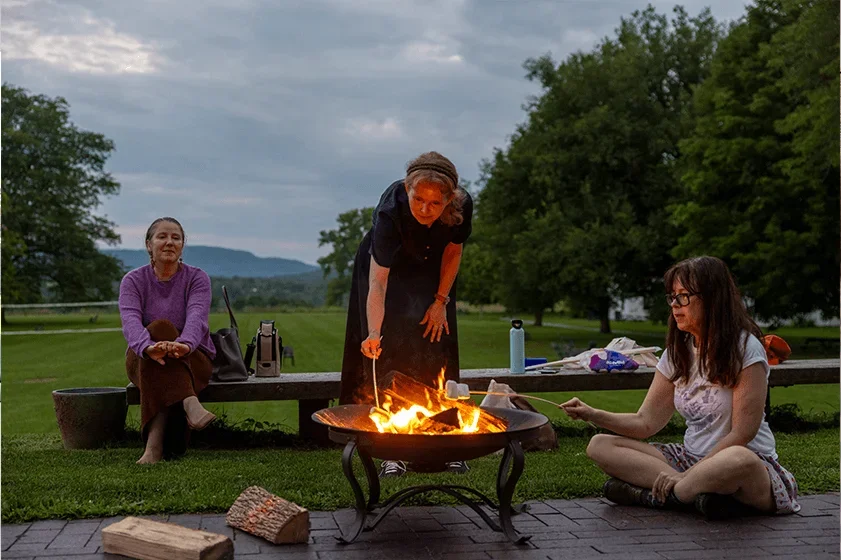
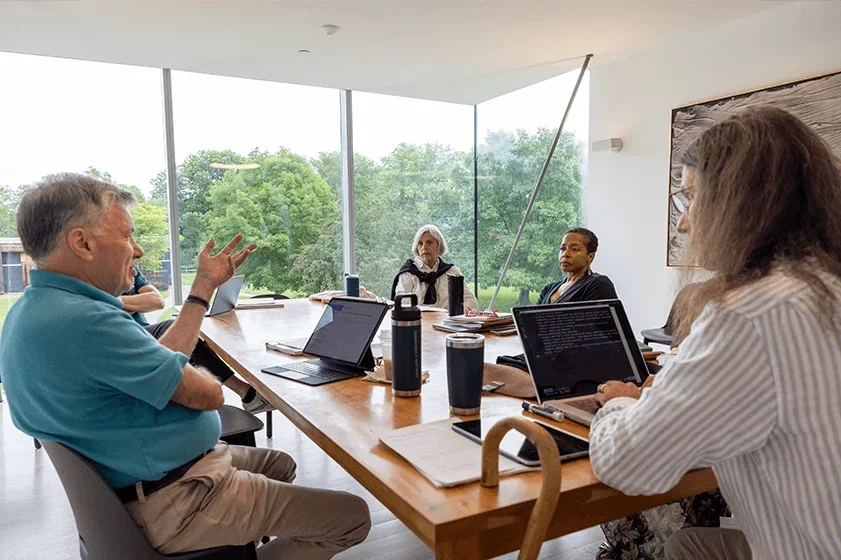
Mornings are structured, with faculty-led sessions. Afternoons are more flexible, with opportunities for individual or group work, informal collaboration, or exploration of campus and the surrounding area. Evenings are unstructured, giving you space to rest, connect, or continue your work in your own way.

Pricing and Logistics
- Tuition: $1,050
- Room: $700 (optional)
- Board: $350 (optional, includes breakfast and dinner). On-campus lunch is provided for all summer program registrants.
If you’re staying on campus, you may share your room with a guest age 21 or older. See the guest FAQ below for rates and details.
Early Bird Discount: Early-bird tuition is $950 ($100 discount on tuition). Register by February 1, 2027, at 11:59 p.m. ET to receive this discount. Bennington alumni, faculty, and staff are eligible for an additional 10% discount.
Frequently Asked Questions
What is the daily schedule like?
Sample Schedule:
AI Course (9:00 AM - 12:00 PM)
Theme: Understanding AI Outputs — Why They Seem Convincing and Where They Fail
Students begin with a simple premise: generative AI systems produce fluent language, but fluency is not the same as understanding. The session is organized around testing that claim directly.
| 9:00 AM - 9:30 AM | Establishing a Working Model The morning opens with a minimal conceptual model of AI:
Students are asked to hold this model provisionally and test it against what they observe. Key question:
|
| 9:30 AM - 10:15 AM | Demonstration: Competence Without Understanding Students examine an AI-generated response to a structured prompt (for example, a literary or historical explanation). The output is typically:
Working in small groups, students evaluate the response as if it were submitted by a peer. Discussion focuses on:
Key question:
|
| 10:15 AM - 10:30 AM | Break |
| 10:30 AM - 11:15 AM | Demonstration: Failure Under Constraint Students are given a second AI-generated response to a more demanding prompt (one that requires integrating multiple kinds of knowledge; for example, combining textual analysis with technical detail, or connecting evidence to a specific formal constraint). The output typically:
Students are asked to identify where the response breaks down. Discussion focuses on:
Key questions:
|
| 11:15 AM - 11:50 AM | Structured Analysis: Reliability and Risk The group shifts from examples to generalization. Students synthesize what they have observed:
Students consider practical implications:
|
| 11:50 AM - 12:00 PM | Closing The session ends by returning to the central premise:
Question for the afternoon/next day:
|
What technology or devices should I bring with me for the program?
Participants should plan to bring their laptop for full participation. If this is an issue for you, please contact summer@bennington.edu.
Do I need a technical background or coding experience?
No. This program is designed for participants with no technical background or prior experience with artificial intelligence. However, you will use AI tools in hands-on exercises and learn how to evaluate their outputs. The focus is on understanding AI conceptually rather than technically.
Is this course for credit?
No, this is a non-credit summer program.
Is this a technical or skills-based course?
No. This course is not focused on technical training or the development of programming skills.
What will I create during the program?
You will develop a small, AI-assisted creative project. You will also develop a short reflective statement on AI, creativity, and ethics.
Can I attend the program online?
No. The program is only available in-person.
How do I request accommodations and support?
If you need accommodations and support, please email summer@bennington.edu.
What is the time commitment each day?
Mornings are structured, with faculty-led sessions. Afternoons are more flexible with opportunities for individual or group work, informal collaboration, or exploration of campus and the surrounding area. Evenings are unstructured, giving you space to rest, connect, or continue your work in your own way.
How do I get to campus?
Please see more information about getting to Campus.
What is the refund policy?
- Cancel by May 1, 2027 - Full refund
- Cancel by June 1, 2027 - 50% refund
- Cancel on or after June 2, 2027 - No refund
Can I get scholarships or financial aid from Bennington College for summer programs?
Because this is not a credit-bearing course, we do not currently offer scholarships or financial aid for summer programs. Please check with your HR department to see if this program qualifies for support from your employer as professional development, continuing education, or another related program.
Can I set up a payment plan for summer programs?
We do not currently offer payment plans.
Can I bring a guest to campus with me?
Yes. Registrants are welcome to have a non-participant guest stay with them in campus housing during the program. Guests must share the same room and be 21 years of age or older.
Additional fees apply for guest food and lodging:
- Housing & Lunch: $75/day
- Breakfast & Dinner: $50/day
Additional questions can be directed to summer@bennington.edu.