Visual Arts: Related Content
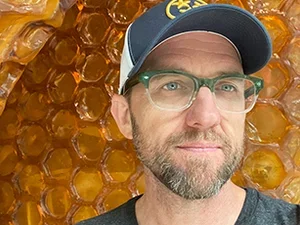
Derek Parker is a mixed-media artist and fabricator with over 25 years of experience in art fabrication and digital making.
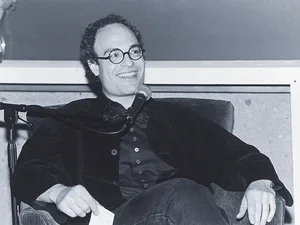
Founder of one of the top U.S. art galleries, top-flight contemporary artists from Jasper Johns to Nan Goldin

Pioneer of color field painting and one of the most influential artists of the past half-century
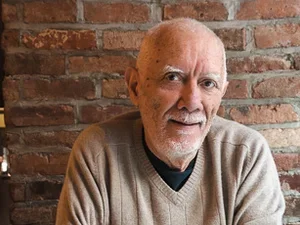
Antonio Sergio Bessa is chief curator emeritus at the Bronx Museum of the Arts. A scholar of concrete poetry, Bessa has organized several critically acclaimed exhibitions on themes related to text-based art, and has published essays on concrete poetry.
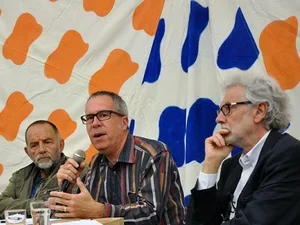
Poet, art critic, former senior editor at Art in America, and recipient of the Chevalier in the Order of Arts and Letters by the French government

Informed by the language of abstraction, Melissa Thorne makes portable and site-specific paintings that use pattern to reference notions of class, feminine subjectivity and social progress. She has exhibited her work internationally.
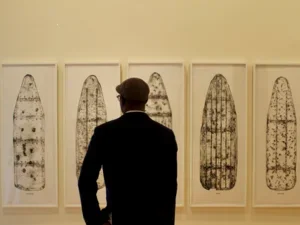
In this section we feature work that came to fruition as an offshoot of primary work or intended work. An actor who turns to legal performance coaching, an installation artist turned furniture maker, a publisher putting out trading cards are among the examples of work that was made in the act of improvisation and curiosity.
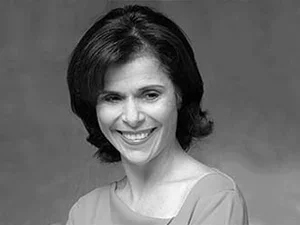
Dean of the School of Architecture and Design at the New York Institute of Technology, member of the prestigious College of Fellows of the American Institute of Architects, and winner of the Rome Prize in Architecture

Camille Hoffman's current work is a mixed-media meditation on Manifest Destiny and its representation in the romantic American landscape. Reflecting on the embedded and latent meanings around light, nature, the frontier, borders, race, gender and power in influential American landscape paintings of the 19th century, she uses materials collected from her everyday life, including holiday-themed tablecloths, discarded medical records, nature calendars, plastic bags and paint, to craft imaginary landscapes that are grounded in accumulation, personal narrative and historical critique.
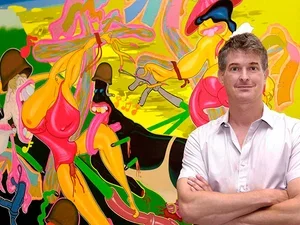
Founder and artistic director of Prospect New Orleans, senior curator at the New Museum in New York from 1995 to 2006, and an independent curator whose work has brought to the spotlight some of the most inventive contemporary artists of the 1990s and 2000s
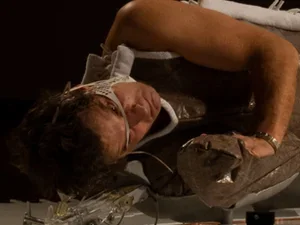
John Umphlett MFA '99 is an innovator and inquisitive thinker, consistently searching for new experimental processes. Entranced within material parameters and properties, he finds ways to fuse those findings with the ephemeral human body.

Textile designer and artist who is assistant designer at Mara Hoffman, who has developed textiles for Pierre Frey, Liberty of London, and other brands

Anne Thompson is an artist whose curatorial practice focuses on political critique, site specificity and activities that move beyond institutional spaces.


J Blackwell '95's recent works are called Neveruses (never•uses). Neveruses are lumpish, androgynous painting-objects comprised of scavenged plastic bags and colored fibers such as wool yarn and silk thread. These hybrid devices are neither useful nor redundant, although both are implied.

Jordan Reznick is a trans photo historian and artist. Reznick's research on settler colonialism in photography describes how Indigenous knowledges and colonial myths shape the medium of photography.
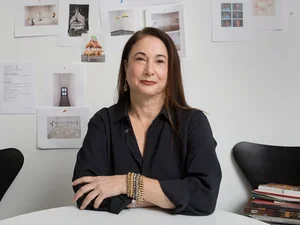
Associate Director of The Museum of Modern Art and curator of countless groundbreaking shows
Photograph © Peter Ross

Jonathan Schwartz makes short films that earned him a place on Film Comment's list of 25 Filmmakers for the 21st century.
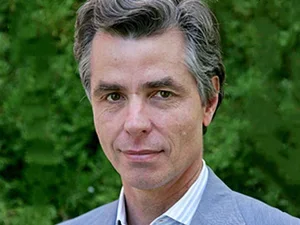
Museum director who has held top positions at the Georgia O'Keeffe Museum, the Katonah Museum of Art, the American Federation of Arts, and, currently, at the Mystic Arts Center
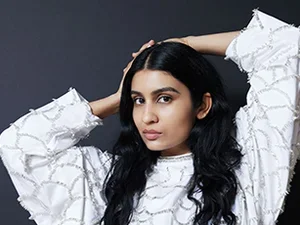
Baseera Khan is a New York-based artist who sees bodies as constantly subject to volatile social environments globally and most notably within capitalist-driven societies such as the United States. Volatility creates a need for Khan to self-censor and develop secretive environments. Living between surveilled and othered, she can find exile anywhere and kinship by its side. These life lessons transform into motives of obscurity that lead her to a careful deployment of material and linguistic shifts. The use of fashion, photography, textiles and music, sculpture and performance manifest Khan's native femme Muslim American experience, a legacy for her aesthetic concealment.