Environment: Related Content

Kathryn Montovan uses mathematical modeling and analysis to understand complex ecosystem interactions and to discover the potential evolutionary causes of insect and animal behaviors. Her teaching is based on active learning techniques and is focused on engaging students of all levels in authentic mathematical inquiry.

Caitlin McDonough MacKenzie is a plant ecologist studying the impacts of climate change on forests and alpine habitats.
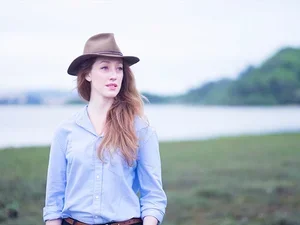
Award-winning journalist, United Nations communications consultant, and author of The Oyster War
Photograph © Patrick O'Connor


David Eisenhauer is a geographer whose research focuses on how climate change and sea level rise are impacting coastal regions. His current project documents how historical patterns of housing and economic discrimination along the New Jersey shore have created uneven landscapes of vulnerability and resilience as well as explores how pathways for adapting to climate change can produce more sustainable and just futures.

Janet Foley applies her expertise in inorganic chemistry to study the effects of pollutants in Vermont groundwater, to understand the effects of ocean acidification on coral reefs, and to explore the photochemistry and medicinal applications of gold compounds.
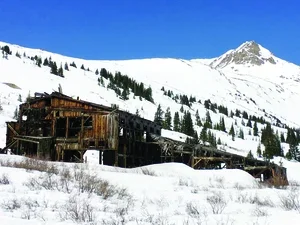
Part II of Making space—for home, for preservation, for performance, for community.

Prazak teaches anthropology and African studies, specializing in economic development and cultural change in East Africa, using multidisciplinary research strategies to address globalization, inequality, culturally-based ways of knowing, gender-based violence, and politics of the body.
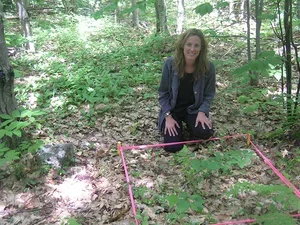
Professor of environmental conservation at UMass Amherst and senior investigator at Harvard Forest who studies plants’ response to climate change, invasive species, and other ecological threats

John Hultgren's work explores the theoretical and ideological foundations of environmental political struggles.

Robert Ransick draws inspiration from the social and political world we live in, history, and the potential for a future that is better.
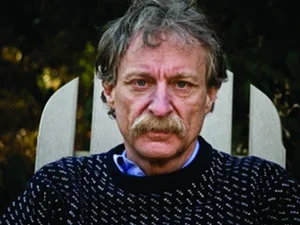
Professor of ecology at the University of North Carolina, Chapel Hill, and director of the award-winning North Carolina Botanical Garden
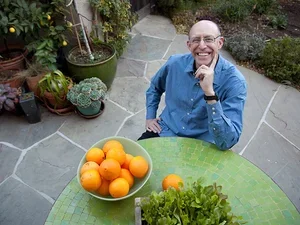
Journalist and bestselling author who has raised the American consciousness of how food gets to our plates

Tim Schroeder applies physical and chemical principles to understand interactions between deep-Earth and shallow-Earth systems. His courses are based on the idea that geology begins as an observational science, but that understanding Earth observations requires a physical sciences context.
Awarded Princeton-in-Asia fellowship to work on legal reform and energy issues in the fight against climate change with the Natural Resources Defense Council in Beijing. She now works for the NYC Compost Project
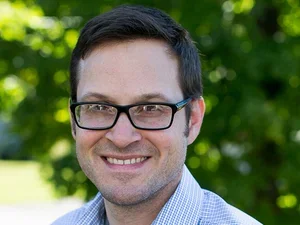
Named an “exceptional young scientist” for his work on the effect of climate change on invasive plant species

Blake Jones studies the underlying mechanisms of development, sociality, learning and memory in free-living animals. His research integrates theories and techniques from climate-science, ecology, physiology, genetics, and cognitive neuroscience.

Susan Sgorbati is a professional mediator and educator whose creative research has led to collaboration across disciplines and borders as both an artist and a driver of social change.
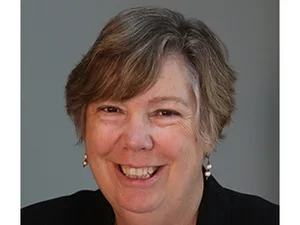
Judith Enck is a senior fellow and faculty member in the Center for the Advancement of Public Action. She is the President of Beyond Plastics and former EPA Regional Administrator, appointed by President Obama. Judith is co author of the book The Problem with Plastic, published by The New Press in December 2025.

When natural disaster strikes, its effects are not experienced outside of history: Lopamudra Banerjee’s work brings together issues of the environment and development to explore how the poor experience such events in disproportionate ways.
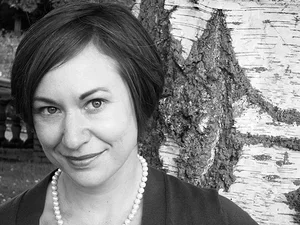
Leader in the development of sustainable business models, brands, and social movements
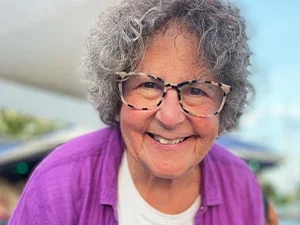
Elizabeth Sherman is known for her work on amphibians and, more recently, on coral reefs and climate change; she collaborates with student researchers in her study of how animals work — both individually and as part of larger ecosystems.

As an atmospheric scientist, Chelsea Corr studies atmospheric particles, ranging from very small pollution aerosols to cloud droplets, and the role these particles play in air quality and climate.