Society Culture and Thought: Related Content

There will be an exhibition of student work on view, "Connecting Through Place: The Future of a New England Mill Town," at the Left Bank Gallery in North Bennington. Bennington faculty and students used the town and landscape of Bennington as a vehicle to understand connections between the biophysical world, societal issues, and history. The College was awarded a National Science Foundation grant in 2012 in support of a three-year curricular project aimed at exploring sustainable futures for former mill towns in New England.

Faculty member Eileen Scully was recently named a faculty fellow in ENACT, a new national program at Brandeis University designed to engage young people in state-level legislative change.

Asad Malik ’19 began his Field Work Term in Libya and finished it in Silicon Valley, all in pursuit of his goal to effect social change through technology.

Noah Coburn spoke to BTWBerkshires about his new book, Losing Afghanistan: An Obituary for the Intervention, recently published by Stanford University Press, and his longtime work in that country studying the effects and conditions of war.

Students make news for their FWT jobs at cultural institutions: Carling Berkhout ’19 in The Manchester Journal about the Smithsonian Institution’s Center for Folklife and Cultural Heritage, Sarah Jack ’17 in the Bennington Banner about Hubbard Hall in Cambridge, NY, and Sam Wood ’19 in the Cape Cod Times about the Wellfleet Harbor Actors Theatre.

Asad Malik ’19, a freshman at Bennington College, is co-creator of a new app that hopes to create a global “connected mind” when users share their thoughts and ideas.

Devin Gaffney ’10 spoke with both The Boston Globe and WBUR's Here and Now about his cutting-edge research on "viral cascades", a term used to describe “the phenomenon of content spreading quickly and widely through a human social network via its digital shadows".
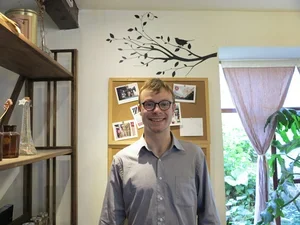
Fulbright scholar Ben Underwood ’13 spoke with GoKunming, southwest China’s largest English-language website, about his current project to develop a large-scale biogas plant in Kunming. Biogas is produced through anaerobic digestion technology, which converts organic waste into fuel. His entire inverview with GoKunming has been republished (with permission) below. Photo credit: Chiara Ferraris.

When Republican presidential candidate Mitt Romney gained more than 100,000 Twitter followers over a single weekend, many in the social media world did a double take. Devin Gaffney ’10, a master's candidate at the Oxford Internet Institute and founder of 140kit.com, did a full-blown statistical analysis. The surprising results of his study can be found in a recent article he co-authored in The Atlantic.
Maliha Ali ’15 has earned a $10,000 grant from the Davis United World Scholars Projects for Peace program to design and implement a public action project in her native Pakistan.

Max Nanis ’12 and Ian Pearce ’11 are two of the authors behind the current cover story of Interactions magazine. The article, "Socialbots: Voices from the Fronts," is based on a study they conducted with web researcher Tim Hwang on fake online identities (“bots”) that can interact with humans and even boost human-to-human interaction on social networks such as Twitter. The results of their study were first published in the MIT Technology Review.

Political science faculty member Rotimi Suberu presented a paper on "Prebendal Politics and Federal Governance in Nigeria" at an international conference on Nigerian politics last month.

Thomas Bruno ’14 was one of 19 amateur photographers and the only American to have his work selected for an upcoming Greenpeace exhibition for pollution awareness in Turkey.
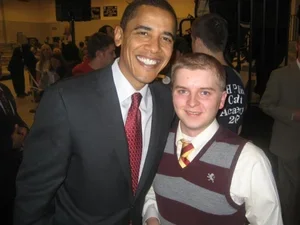
Brian Morrice '10 was one of 140 young leaders selected nationwide to serve as a White House intern this spring.

Psychology faculty member David Anderegg spoke at the TEDx Conference in Brussels, Belgium, last month on the growing culture of anti-intellectualism in America—a topic central to his critically acclaimed 2008 book Nerds: Who They Are and Why We Need More of Them.

When a New York Times reporter reached out to psychology faculty member David Anderegg for a story on America's need for more "cool nerds"—young people who can meld computing skills with other fields—Anderegg pointed out one obvious problem.
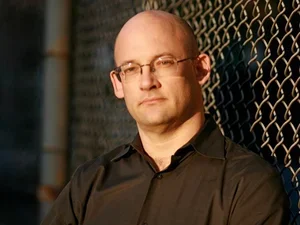
Author, consultant, and educator Clay Shirky, an expert on the social and economic effects of Internet technologies, will speak on "Motivation in a Connected Age" on Monday, April 5, at 7:00 pm in the College's Tishman Lecture Hall. The event is free and open to the public.
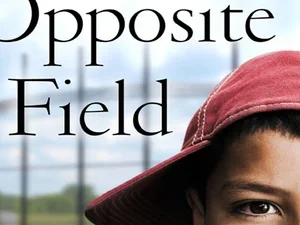
Pulitzer Prize-winning journalist Jesse Katz '85 will read from The Opposite Field, his critically acclaimed memoir of raising a son and reviving a Little League in the immigrant suburbs of L.A., on Tuesday, December 1, at 7:00 pm in the College's Franklin Living Room. The event, part of Bennington's Literature Gathering series, is free and open to the public.

Political science faculty member Rotimi Suberu authored a chapter in Corruption, Global Security, and World Order, a new book published this year by Brookings Institution Press.
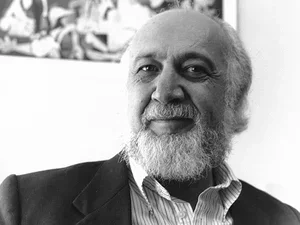
Faculty member Mansour Farhang appeared on Aljazeera.net this week to discuss fallout from the disputed presidential election in Iran.

Barnard College honored Bennington alumna and former trustee Kay Crawford Murray '56, a pioneer for the advancement of women attorneys, with a 2009 Medal of Distinction at its 117th commencement last month.

Bennington student Noryang Yeshi '11 will celebrate the opening of Anandwan, an exhibition of photographs taken at a leprosy clinic in central India, on Monday, April 27, from 6-10 pm in the College's Barn East Gallery. This event is free and open to the public.

Faculty member Mansour Farhang was on NPR's The World this week to discuss the political implications of journalist Roxana Saberi's imprisonment in Iran. An American-Iranian, Saberi was convicted of spying for the United States and sentenced to eight years in Iranian prison.

During a post-Katrina panel discussion with a group of New Orleans-based artists in early 2006, Dan Cameron '79, then-senior curator at the New Museum of Contemporary Art in New York, just blurted it out: "A biennial would go really, really well in New Orleans."

On September 19, 2008, Bennington College faculty member Mac Maharaj received the prestigious Global Award for Outstanding Contribution to Human Rights from Priyadashni Academy in Mumbai, India.

Trailblazing attorney who has spent a career working to highlight issues of gender bias in the legal profession.

Siyamak Zabihi-Moghaddam’s interest in history and the human rights situation in the Middle East arise from his first-hand experiences of revolutionary upheaval and systematic oppression in Iran. Understanding the region’s past and present conditions, he believes, is a necessary step towards addressing the challenges facing it today.

Emily Mitchell-Eaton is a critical human geographer who studies how empires create diasporas that stretch to unexpected places. Her work focuses particularly on migration between the Pacific Islands and the U.S. South. As a geographer interested in mobility and migration, she explores how racial meanings, laws and policies, military infrastructures, and emotions travel through space and over time.

David Eisenhauer is a geographer whose research focuses on how climate change and sea level rise are impacting coastal regions. His current project documents how historical patterns of housing and economic discrimination along the New Jersey shore have created uneven landscapes of vulnerability and resilience as well as explores how pathways for adapting to climate change can produce more sustainable and just futures.