
Low-Residency MFA in Dance
Beginning during the summer term in France, the low-residency program is designed for mid-career artists, teachers, and dance professionals with a strong interest in expanding their knowledge and experience in an uninterrupted way. The summer term dates in France are June 14 – July 23, 2027.
The residency summer term begins with the Study Cycle/Symposium. During this time, students also attend programming of the International Festival Montpellier Danse.
Applications for the program are now open with a deadline of March 1st.
Critical and Experimental Formations of Study
The program is focused on rethinking inherited practices of dance education and considers the very idea of study differently. It extends spaces for learning and engagement from studios and classrooms to international festival environments, community centers, museums, and online learning platforms. The format allows flexibility and provides opportunities for working professional artists to broaden and expand their career trajectories and to sustain their lives in the arts. The program is anchored by prominent scholars, artists, and creative thinkers who foster critical conversations about the meanings, purposes, pedagogies, and potentialities of dance and performance.
What is the Program?
The curriculum, built within an experimental and mobile architecture, relies heavily on a collaborative, international interdisciplinary network of individuals committed to deep engagement and expansive relationships.
The program has two cohort models. One cohort where students study continuously for four terms (summer, fall, spring, and summer) and a flex-cohort model for students who need more flexibility and enroll in six or seven terms. The summer term will happen at Agora Danse in Montpellier, France from June 14 – July 23, 2027.
Students complete a total of 60 credits for the degree.
Study Cycles
Study Cycles are embedded in the curriculum and serve as a curated platform connecting students with global artists and scholars through a dynamic mix of artist's talks, lectures, workshops, and live performances. The platform within the museum setting offers a unique space for exchange, collaboration, and deep study.
This coming year’s Study Cycle 10 is framed around the concept of "eco-fabulation." The symposium will center practices, works, and worldviews that engage human/more-than-human hybridity and treat flora, fauna, and geologic matter (from soil, glaciers, and sediments to spores, tides, and marshes) as testimonial interlocutors. We aim to bring together artists, dancers, and thinkers to dwell on questions of deep time, animism, and interspecies kinship informed by ancestral and global Indigenous cosmologies, approaching ecological forces as kin whose stories challenge Western demarcations between sentient humans and supposedly inanimate matter.
7th Study Cycle - Vanishing Points
Vanishing Points: Bennington Low Residency MFA in Dance
7th Annual Study Cycle
8-12 JULY
MO.CO Panacée
14 Rue de l’École de Pharmacie 34000 Montpellier
Organized by Gee Wesley
Contributors
Thomas F. De Frantz
Cedric Fauq
Rebecca Hilton
Ishmael Houston-jones
Molemo Moiloa (MADEYOULOOK)
Gabi Ngcobo
Irit Rogoff
Arkadi Zaides
ABOUT VANISHING POINTS
This symposium considers disappearance as a capacious metaphor for apprehending the archival absences that result from histories of collective loss, the survival of embodied knowledge through ephemeral acts of transfer, and the political status of lives erased from public life through systems of violence. In the West, racialized, indigenous, and queer bodies are closely surveilled, their access and mobility tightly monitored, and through this over-availability, such lives are routinely disappeared by incarceration, police violence, and the displacing effects of socio-economic stratification. In such contexts, it is only at the point of their vanishing by way of state murder, systematic incarceration, or a statistical reduction that vulnerable subjects are most civically visible and politically efficacious, albeit merely as the presence of their very absence. This symposium employs the concept of the vanishing point to invoke how embodied practices of collective mourning, memory, and movement building blur a set of hierarchies that govern and constrict the body as well as debase the status of embodied cultural forms. This series of workshops and programming explores how embodied practices–including oral speech, movement, and physical assembly–collapse a set of binaries between absence and presence, spectacle and opacity, inscription and gesture, death and liveness, past and present. For vulnerable cultures, life is lived at the vanishing point where these seemingly parallel concepts converge, cross, and collapse, and in doing so, unsetting the stability of the very hierarchies that limit one’s agency as well as offering new modes of defining knowledge, assigning value, marking time, and restoring the past.
SCHEDULE
MONDAY, JULY 8th
12:30 PM - 2:00 PM Introduction by Gee Wesley
2:00 PM - 4:00 PM Arkadi Zaides
TUESDAY, JULY 9th
10:00 AM - 12:00 PM Molemo Moiloa (MADE YOU LOOK)
12:00 PM - 2:00 PM BREAK
2:00 PM - 4:00 PM Ishmael Houston-Jones
WEDNESDAY, JULY 10th
10:00 AM - 12:00 PM. Irit Rogoff, followed by a conversation with Arkadi Zaides
12:00 PM - 2:00 PM Break
2:00 PM - 4:00 PM Gabi Ngcobo
THURSDAY, JULY 11th
10:00 AM - 12:00 PM Rebecca Hilton
12:00 PM - 2:00 PM. Break
2:00 PM - 4:00 PM Thomas F. De Frantz
FRIDAY, JULY 12th
10:00 AM - 12:00 PM Cédric Fauq
12:00 PM - 2:00 PM Break
2:00 PM - 4:00 PM Closing Session Gee Wesley & Guests
ABOUT THE CURATOR
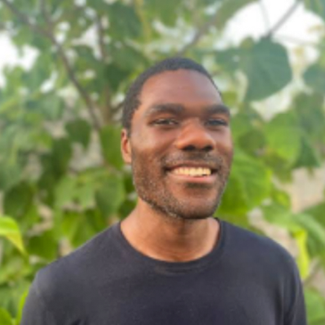 Gee Wesley is an arts organizer born in Monrovia, Liberia, and based in New York where he works as a Curatorial Assistant in the Department of Media and Performance at the Museum of Modern Art. Prior to joining MoMA, Wesley held roles as Program Director at Recess (Brooklyn, NY), Curatorial Fellow at SculptureCenter (Queens, NY), Curatorial Fellow at the Institute of Contemporary Art (Philadelphia, PA), visiting instructor at Bard College (Annandale-on-Hudson, NY), and adjunct faculty in the Curatorial Practice MFA at the Maryland Institute College of Art (Baltimore, MD). Wesley is a co- founder and board member of Ulises, a nonprofit art bookshop based in Philadelphia. His work explores the relationship between publics and publications and how independent arts initiatives incubate new modes of curatorial and artistic practice. Wesley received his M.A. from the Center for Curatorial Studies, at Bard College.
PARTICIPANT BIOGRAPHIES
 Thomas F. DeFrantz directs SLIPPAGE: Performance|Culture|Technology, the Chicago-based group explores emerging technology in live performance
applications. DeFrantz believes in our shared capacity to do better and engage creative spirit for a collective good that is anti-racist, proto-feminist, and queer affirming. Creative Projects include Queer Theory! An Academic Travesty commissioned by the Theater Offensive of Boston and the Flynn Center for the Arts; fastDANCEpast, created for the Detroit Institute for the Arts; reVERSE- gesture-reVIEW commissioned by the Nasher Museum in response to the work of Kara Walker. Books: Dance History(s): Imagination as a Form of Study (with Annie B. Parson, 2024) Routledge Companion to African American Theater and Performance (with Kathy Perkins, Sandra Richards, and Renee Alexander Craft, 2018), Choreography and Corporeality: Relay in Motion (with Philipa Rothfield, 2016), Black Performance Theory: An Anthology of Critical Readings (with Anita Gonzalez, 2014), Dancing Many Drums: Excavations in African American Dance (2002), and Dancing Revelations: Alvin Ailey's Embodiment of African American Culture (2004). DeFrantz convenes the Black Performance Theory working group as well as the Collegium for African Diaspora Dance, a growing consortium of 325 researchers committed to exploring Black dance practices in writing. Teaching assignments include University of the Arts Mobile MFA in Dance; ImPulsTanz; New Waves Institute; Juilliard; SNDO; P.A.R.T.S.; Movement Research; Lion’s Jaw; Fresh Festival; and faculty at Hampshire College, Juilliard, Stanford, Yale, MIT, NYU, Northwestern University, the University of Nice. DeFrantz consults often with dance programs around the globe, and has helped artists and educators rethink how critical studies are entirely foundational to the making of an engaged artist. DeFrantz has chaired the Program in Women’s and Gender Studies at MIT; the concentration in Physical Imagination at MIT; the Department of African and African American Studies at Duke; and served as President of the Society of Dance History Scholars. DeFrantz acted as a consultant for the Smithsonian Museum of African American Life and Culture, contributing concept and a voice-over for a permanent installation on Black Social Dance that opened with the museum in 2016. slippage.org
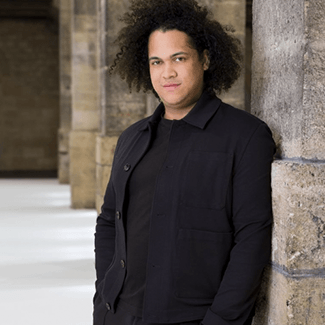 Since September 2021, Cédric Fauq serves as chief curator at Capc musée d’art contemporain de Bordeaux where his most recent projects include the collective exhibitions Barbe à Papa (Cotton Candy), Le Club du Poisson-Lune (The Moonfish Club), the collection display Amour Systémique (Systemic Love) and the never-ending festival L’Académie des Mutantes (The Mutant Academy). At Capc, he also collaborated with artists Abbas Zahedi, Olu Ogunnaike, Sung Tieu, Aria Dean and Maxime Bichon. From 2020 to 2021, he worked as curator at Palais de Tokyo, where he developed the exhibitions Antibodies and Sarah Maldoror: Tricontinental Cinema (which toured to the Wexner Center for the Arts in Columbus, Ohio in 2024). Previously, he worked as exhibitions curator at Nottingham Contemporary where his projects included exhibitions (Still I Rise: Feminisms, Gender, Resistance; Sung Tieu: In Cold Print; Grace Before Jones: Camera, Disco, Studio), performances (Okwui Okpokwasili; Steffani Jemison; Lou Lou Lou Sainsbury) and publications. He also writes and develops freelance projects such as Matthieu Laurette’s retrospective at MAC VAL (2023-2024). He co-directed clearview.ltd in London (2016-2018); and was a member of the Baltic Triennial XIII curatorial team (2017-2018). At the core of his practice is the reevaluation of the values of contemporary art – as a professional and cultural field –, together with curator Anne Colin, which led to collaboations with networks BOTOX(s) and Mécènes du Sud – Montpellier. In 2023, he was rapporteur for Bertille Bak for the Marcel Duchamp Prize and a jury member for the Turner Prize.
 Rebecca Hilton is an Australian born dance person now living in Sweden by way of New York City. In a performance practice spanning four decades she has contributed to the work of a range of artists including Russell Dumas, Stephen Petronio, Mathew Barney, Michael Clark, Tere O'Connor, Jennifer Monson, John Jasperse, Lucy Guerin, Tino Sehgal, Chrysa Parkinson, Xavier Le Roy and Scarlet Yu, among others. She is currently Professor of Choreography for the interdisciplinary research area SITE EVENT ENCOUNTER at the Stockholm University of the Arts where she teaches and supervises in the doctoral program. Her ongoing long-term artistic research project, GROUPNESS, manifests as a series of performed, participatory, written and spoken experiments unfolding relationships between embodied practices, oral traditions and choreographic systems. Lately, her research environments have mainly been contexts and communities of care. She is artistic researcher in residence for DöBra (Good Death), a Karolinska Institute transdisciplinary research program exploring experiences of, and relationships to ageing, death, dying and grieving in Sweden. Hilton has participated as keynote speaker in Artistic Research contexts (Society for Artistic Research, Stockholm’s Kontsfack, University of Iceland, University of Dublin etc.) and scientific health care contexts (Public Health and Palliative Care International Conference, Karolinska Institute, Melbourne’s Peter Macallum Cancer Centre etc.) She has written for a range of publications: Routledge Dance Studies Reader (UK), the Swedish Book of Dance History (Sweden), Movement Research Journal (US), Sarma/Oralsite (Belgium), Writings on Dance and Performance Paradigm (Australia). Recently she contributed chapters to Bare Bodies – Thresholding Life, de Gruyter (2023) and co-edited the collections Researching in/As Motion, Nivel/Teak (2019), and Writing Choreography: Textualities of and beyond dance, Routledge (2024).
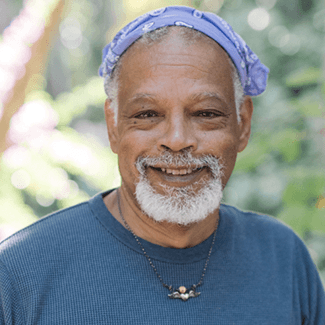
Ishmael Houston-Jones’ improvised dance and text work has been performed world-wide. Drawn to collaboration as a way to move beyond boundaries and the known, Houston-Jones celebrates the political aspect of cooperation. Houston-Jones curated Platform 2012: Parallels at Danspace Project, an 8- week series of events that interrogated the intersection of dance makers from the African Diaspora with the aesthetics of Postmodern choreography. In 2016 he co-curated, with Will Rawls, Platform 2016: Lost and Found – Dance, New York, HIV/AIDS, Then and Now that queried the effects that the loss of a generation of artists to AIDS has had on current dance creation. As an author Ishmael Houston-Jones’ writing has been anthologized in several books, recently in Saturation – Race, Art and the Circulation of Value, (2020) and Writers Who Love Too Much – New Narrative 1977 – 1997, (2017). Houston- Jones’ first book FAT and Other Stories was published in 2018. The recipient of four New York Dance and Performance “Bessie” Awards, Houston-Jones’ work has received support from: a 2022 John Simon Guggenheim Memorial Foundation Fellowship; a 2021 United States Artists Fellowship; The Hewlett Foundation, 2020; The Robert Rauschenberg Foundation, 2018; The Herb Alpert Awards in the Arts, 2016; The Doris Duke Charitable Trust, 2015; and
The Foundation for Contemporary Arts, 2013. Ishmael Houston-Jones is an adjunct professor at New York University’s Tisch School of the Arts’ Experimental Theater Wing, and has been a master lecturer at The University of the Arts (Philadelphia) School of Dance. Houston-Jones has also been a visiting professor at: Massachusetts Institute of Technology, Cornell University, Sarah Lawrence College, Bennington College, Exerce master degree program, Montpellier, France, The Sareyyet Ramallah, Palestine and many other institutions world-wide.
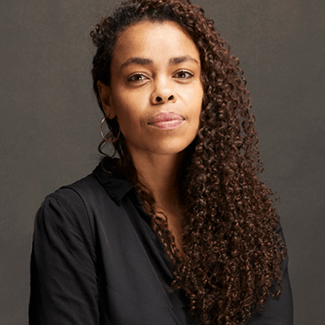 Molemo Moiloa lives and works in Johannesburg, and has worked in various capacities at the intersection of creative practice and community organizing. She currently works on notions of ungovernability, social infrastructures of
cultural organizing, and relationships to nature. She is one half of the artist collaborative MADEYOULOOK, who explore everyday popular imaginaries and their modalities for knowledge production. Molemo also co-leads the Open Restitution Africa project, an Africa-focused research platform for restitution of African heritage under the auspices of Andani.Africa. She also co-leads the ungovernable, an experiment in communitary practice and ungovernability. Molemo is a Soros Arts Fellow 2023/24, was a Chevening Clore Fellow 2016/17, and winner of a Vita Basadi Award for 2017. MADEYOULOOK are selected artists of the South African Pavilion for the Venice Biennale 2024, were DAAD Artists-in-Berlin fellows for visual arts 2022 and Lumbung artists at documenta fifteen, 2022. They were nominees for the VLC Prize for Art and Politics 2016/17 at the New School, New York.
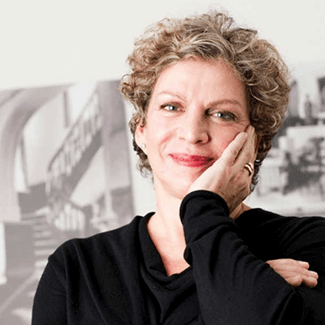 Professor Irit Rogoff is one of the initiators of the transdisciplinary field of Visual Culture and founders of the department at Goldsmiths. The establishing of this field is led by a belief in working beyond bodies of inherited disciplinary knowledge and find motivation for knowledge production in the current conditions we are living out. Her 1997 essay “Studying Visual Culture” (The Visual Culture Reader, ed. N. Mirzoeff, 1998, 2nd ed. 2002) articulated some of the substantive and methodological strands of this new field as a meeting ground between the philosophical, the political and contemporary creative practices. In a series of ensuing texts Rogoff further expanded concerns in the field into participatory practices (“Looking Away – Participations in Visual Culture” in Art After Criticism, 2004 ) and the emergence of the curatorial as events of knowledge in the so called “Educational Turn” (‘Turning” e-flux Journal 2008 and ‘Education Actualised’ special issue of e-flux journal no.14, 2010, “Smuggling – An Embodied Criticality” 2008 , 2013 and “The Expanding Field” in The Curatorial, 2013). Another strand of Rogoff’s work concerns geography, counter cartography and questions of Globalization. In publications such as “Terra Infirma – Geography’s Visual Culture” 2000, “Engendering Terror” (Geography and the Politics of Mobility 2002) , ‘The Where of Now’ (Time Zones, Tate Modern 2004), ‘GeoCultures – Circuits of Art and Globalization” (Open, no 16 , 2009) ‘Oblique Points of Entry” (Contemporary
Art from the Middle East 2015) – Rogoff has explored how critical perspectives and emergent subjectivities form the basis for alternative understandings of the relations between subjects, places and spaces. Rogoff works between academic teaching, theoretical writing, curatorial projects and organizing public study. Together with Nora Sternfeld, Stefano Harney, Adrian Heathfield, Louis Moreno and Massimiliano Mollona, she formed the freethought collective in 2011.
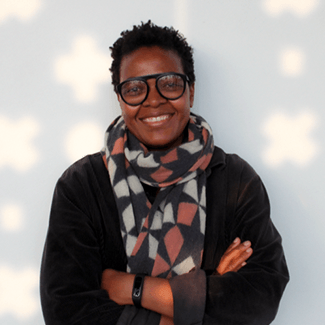 Gabi Ngcobo is the Director of Kunstinstituut Melly, Rotterdam, NL. Between 2020 and 2023 she was Curatorial Director at the Javett Art Centre at the University of Pretoria (Javett-UP) since 2021 where she organised the exhibition Handle with Care (2021) and Scenorama (2022). Ngcobo has been critical in positioning the Art Centre as a “living academy” and has set up collective learning spaces in dialogue with works from loaned collections and bringing to South Africa Frequencies, a project by Oscar Murillo as well as working with artists Nolan Oswald Dennis and Luana Vitra on new commissions supported by the Hartwig Art Foundation (NL). In 2022 Ngcobo curated The Show is Over at the South London Gallery and co-curated (with Murillo) The ‘t’ is Silent at the Museum Dhondt-Dhaenes in Deurle, Belgium. Before joining Javett-UP Ngcobo worked on independent curatorial projects, collaborated with various institutions in different parts of the world and for seven years lectured at the Wits School of Arts in Johannesburg. In 2018 she curated the 10th Berlin Biennale titled We Don’t Need Another Hero and was one of the co-curators of the 32nd Sao Paulo Bienal titled Incenteza Viva (2016). She is a founding member of the Johannesburg based collaborative platforms NGO – Nothing Gets Organised (2016-) and the Center for Historical Reenactments (2010–14).
Ngcobo’s writings have been published in various publications including Shooting Down Babylon: The Tracey Rose Retrospective at Zeitz MoCCA, Cape Town, (2022) Uneven Bodies, Govett-Brewster Art Gallery, Aotearoa New Zealand (2021), The Stronger We Become the catalogue of the South African Pavilion, Venice (2019), We Are Many: Art, the Political and Multiple Truths and Texte Zur Kunst September 2017.
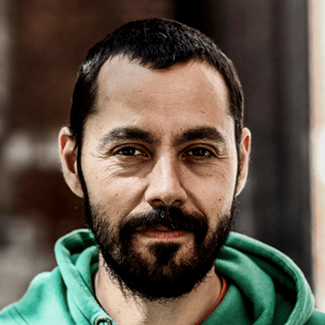
Arkadi Zaides (b. 1979, Homel Ballarus, former USSR) works as a choreographer, performer and researcher. He obtained a master’s degree at the AHK Academy of Theater and Dance in Amsterdam (NL). He is currently working on his joint practice-based PhD degree at Antwerp University, and Ghent University. He is a member of the CORPoREAL research group at the Royal Conservatoire Antwerp and a member of the S:PAM (Studies in Performing Arts & Media) at Ghent University (BE). His work was presented in multiple venues across Europe, Asia and The Americas. He is a recipient of
numerous prizes, among them a prize for demonstrating engagement in human-rights issues, awarded to Zaides by The Emile Zola Chair for Interdisciplinary Human Rights Dialogue (IL).
ABOUT THE MFA
On the occasion of the inaugural 2024 Low Residency MFA Dance program at Bennington College, this symposium marks the 7th annual study cycle. The 2024-2025 Low Residency MFA Dance program is supported through residency at the Institute Chorégraphique International - Centre Chorégraphique National de Montpellier.
8th Study Cycle - Of Things Not Seen: The Body as Witness and Participant
Of Things Not Seen: The Body as Witness and Participant
8th Annual Study Cycle
July 7 - 11, 2025
MO.CO Panacée
14 Rue de l’École de Pharmacie 34000 Montpellier
Organized by Esther Siddiquie and Gee Wesley
Contributors
Sepake Angiama
Phanuel Antwi
Melissa Blanco Borelli
Gabi Ngcobo
Ishmael Houston-Jones
Mohanad Smama
Paul Maheke
Sandra Noeth
Tia-Monique Uzor
Arkadi Zaides
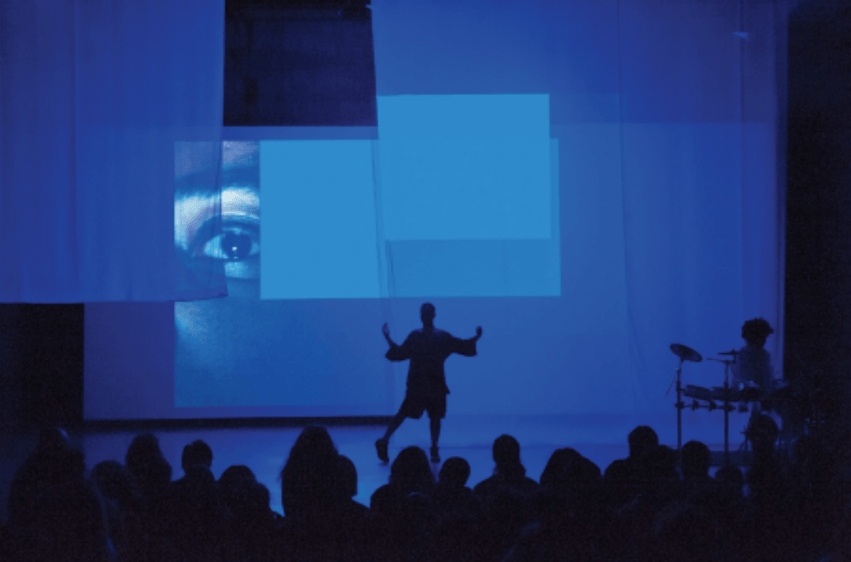
Of Things Not Seen: The Body as Witness and Participant is a week-long student and public convening scheduled for 7-11 July, 2025 at the MO.CO Panacée led by Gee Wesley. Through a range of interdisciplinary contributors, this symposium explores how the body is rendered as evidence within systems of disciplinary surveillance, legal justice, and cultural circulation. Contributors will probe the evidentiary uses of the body—as corporeal memory, physical residue, biometric information, or
photographic traces—throughout the realms of art, culture, and governmentality. This symposium looks at the limits and possibilities of evidentiary systems and their relationship to embodied modes of testimony and bearing witness.
In a time of ubiquitous surveillance and data collection by state actors and digital platforms alike, this symposium asks how our understanding of bodily evidence shifts when bodies appear as data, are described through narrative testimony, or are commodified through image circulation. How can we reclaim our bodies from extractive visual economies that capture, monitor, and track our lives? From ethnographic documentation of Indigenous and African movement practices compiled by colonial administrations to cultural debates around the copyright, commodification, and appropriation of vernacular dance practices through viral social media; what happens when the body intersects with strategies of enforcement, modes Paul Maheke, Mbu, 2017. Performance view, Tate Modern, London, March 25, 2017. Paul Make. Photo: Brotherton-Lock of biopolitical control, and metrics of social risk? At stake in this symposium is how the performing body can help us apprehend unseen and unseeable traces of the past. Together, contributors will negotiate the blurred boundaries between witnessing and other registers of observation that often govern evidentiary systems of authority and justice.
Of Things Not Seen: The Body as Witness and Participant is the eighth annual Study Cycle Symposium organized for Low Residency MFA in Dance at Bennington College in collaboration with the Performance Epistemologies of the Global Majority Summer School (affiliated with Royal Central School of Speech and Drama and Northwestern University).
The symposium is free and open to the public with prior reservations.
To reserve, please email lrmfadance@bennington.edu.
Google Translate on a personal device is recommended for live translation/transcripts of the sessions
SCHEDULE
MONDAY, JULY 7th
12:30 Introductions, Gee Wesley
13:00 Introductions of PEGM, Melissa Blanco Borelli & Tia-Monique Uzor
14:30 Gee Wesley
15:30 BREAK
16:00 Phanuel Antwi
TUESDAY, JULY 8th
11:00 Arkadi Zaides
12:30 BREAK
14:30 Sepake Angiama
WEDNESDAY, JULY 9th
11:00 Ishmael Houston-Jones & Mohanad Smama
12:30 BREAK
14:30 Sandra Noeth
16:00 Study Hall (location TBD), *Closed to the public
THURSDAY, JULY 10th
11:00 Paul Maheke
12:30 BREAK
2:30 Gabi Ngcobo
FRIDAY, JULY 11th
12:00 Courtyard Conversations
(Unprogrammed time for students to schedule meeting/reflection time with contributors and faculty)
14:00 Gee Wesley / Closing Panel with remaining participants
PARTICIPANT BIOGRAPHIES
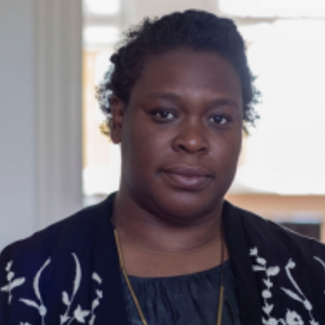 Sepake Angiama praxis stems from embodied & radical pedagogies, black feminist thought, rethinking human/non– human relations rooted in how we might reimagine and inhabit the world otherwise. Since 2020, she is the artistic director of the Institute of International Visual Arts (iniva), home of the Stuart Hall Library and iniva's archive. Founded in 1994 under the guidance of Professor Stuart Hall as inaugural Chair, iniva is an evolving visual arts organisation that collaborates with artists, curators, and researchers to challenge dominant narratives and promote underrepresented perspectives in contemporary art.
The Stuart Hall Library (SHL) functions as a critical, creative, and community-centred hub. It supports iniva’s mission to document and disseminate knowledge related to transnational, diasporic, and decolonial visual arts practices, promoting discourse on race, gender, class, identity, and cultural politics.
The institution is dedicated to developing rigorous artistic research, radial education practices, collective study,
publishing and community led programming that reflects on the social and political impact of globalisation
@suburbanelectrsta.
 Phanuel Antwi is a poet, literary cultural critic, and researcher in the field of critical Black studies. He is an associate professor in the Department of English Language and Literatures at the University of British Columbia. In 2022, he was named Canada Research Chair in Black Arts and Epistemologies. He writes, researches, and teaches in critical Black studies, settler colonial studies, Black Atlantic and diaspora studies, Canadian literature and culture since 1763, critical race, gender and sexuality studies, and material culture. He has published articles in Small Axe, Journal of West Indian Literatures, Transition: THe Magazine of Africa and the Diaspora, Interventions, a/b: Auto/Biography Studies, and Studies in Canadian Literature, and has curated art exhibits at the Vancouver Art Gallery, at the Libby Leshgold Gallery at Emily Carr University, and Or Gallery. His book, On Cuddling: Loved to Death in the Racial Embrace, was published in 2023 by Pluto Press, and he is completing a second book, Currencies of Blackness: Cheerfulness, Faithfulness, and Politeness in Settler Writing.
 Dr. Melissa Blanco Borelli is a critical dance studies scholar, choreographer, and cultural critic. She is an Associate Professor of Theatre and the Director of the Dance Program. She has been on faculty at MIT, University of Surrey (UK), Royal Holloway, University of London (UK) and the University of Maryland, College Park. As an interdisciplinary scholar, her
research interests are broad. They include Blackness in Latin America, critical dance studies, performative writing, popular dance on screen, Black performance theory, (Black) feminist (auto)ethnography, historiography, archives, and the digital humanities. She was the Principal Investigator in a UK Arts and Humanities Research Council and Colciencias funded grant project (2018-2021) that focused on embodied performance practices, memory, and archives. Blanco Borelli and her co researchers at the Universidad de Antioquia worked with Afro Colombian and indigenous communities affected by the Colombian armed conflict and created a web- based digital archive that highlights their worldmaking creative practices. The archive can be found at www.corpografias.com and her collaborative research on performance, embodiment and the digital
continues via www.perbodigital.com. She is currently working on a book tentatively titled Choreographies of Displacement in Contemporary Colombia which looks at the function of corporeality in Colombian dance, protest movements, theatre, photography, music, and film.
She is the author of She is Cuba: A Genealogy of the Mulata Body which won the Dance Studies Association’s De la Torre Bueno Prize® for best book in dance studies in 2016. She is also the editor of The Oxford Handbook of Dance and the Popular Screen (2014). Most recently, she received the UK’s Theatre and Performance Research Association (TaPRA) Best Edited Collection prize in 2022 for the special issue of Contemporary Theatre Review “Outing Archives/Archives Outing” she co-edited with Professor Royona Mitra (Brunel University) and Professor Bryce Lease (Royal Central School of Speech and Drama). She received honorable mention for Gertrude Lippincott Award (2009) for her essay “Y ahora qué vas a hacer, mulata?” Her scholarly work appears in journals such as Theatre History Studies, The Black Scholar, Contemporary Theatre Review, Women & Performance: a journal of feminist theory, The International Journal of Screendance and in numerous anthologies including Black Performance Theory, The Oxford Handbook of Dance and Competition, Zizek and Performance and The Oxford Handbook of Screendance. Forthcoming publications include chapters in The Oxford Handbook of Black Dance, The Oxford Handbooks of Dance Praxis, and the Routledge Companion to Bodies in Performance co-edited by Hershini Young, Victor Ramirez Ladron de Guevara and Roberta Mock. She was the President of the Dance Studies Association from 2019-2022. She has written op-eds which have appeared in The Feminist Wire and The Huffington Post. Her PhD mentoring was recognized with a Mentor of the Year Award 2021 from the University of Maryland, College Park. She is affiliated faculty in Performance Studies. Blanco Borelli is also on the editorial board for Contemporary Theatre Review and the series co-editor (with Wendy Arons and Elizabeth Son) of Women's Innovations in Theatre, Dance, and Performance (Bloomsbury).
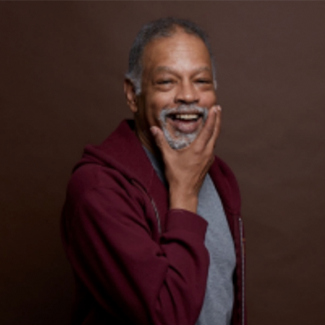
Ishmael Houston-Jones is a choreographer, author, performer, teacher, and curator. His improvised dance and text work has been performed worldwide. Drawn to collaboration as a way to move beyond boundaries and the known, Houston- Jones celebrates the political aspect of cooperation. He and Fred Holland shared a 1984 New York Dance and Performance “Bessie” Award for Cowboys, Dreams and Ladders, which reintroduced the erased narrative of the Black cowboy back into the mythology of the American West. He was awarded his second “Bessie” Award for the 2010 revival of THEM, his
1985/86 collaboration with writer Dennis Cooper and composer Chris Cochrane. In 2017 he received a third “Bessie” for Variations on Themes from Lost and Found: Scenes from a Life and other Works by John Bernd. Houston-Jones received a fourth “Bessie” in 2020 for Service to the Field of Dance.
As an author Houston-Jones' essays, fiction, interviews, and performance texts have been published in several anthologies. His work has also appeared in the magazines PAJ, Movement Research Performance Journal, Bomb, and Contact Quarterly. His first book, FAT and Other Stories was published in 2018 by Yonkers International Press.
He is currently an adjunct professor at The Experimental Theater Wing of NYU/Tisch School of the Arts and a master lecturer at Bennington College in Vermont. In addition, he has been a visiting or part-time professor at: Yale University, Harvard University, Cornell University, Impulstanz in Vienna, Austria, Sarah Lawrence College, California Institute of the Arts, The Sareyyet in Ramallah, Palestine, Exerce master degree program in Montpellier, France, Urban Bush Women Summer Institute at Florida State University, and at numerous Performing Arts Festivals worldwide.
Houston-Jones curated Platform 2012: Parallels which focused on choreographers from the African diaspora and postmodernism and co-curated with Will Rawls Platform 2016: Lost & Found, Dance, New York, HIV/AIDS, Then and Now. Houston-Jones is a 2022 recipient of the John Simon Guggenheim Memorial Foundation Fellowship and a 2021 recipient of the United States Artists Fellowship. In 2024 he was awarded the Balasaraswati/Joy Ann Dewey Beinecke Endowed Chair for Distinguished Teaching award from the American Dance Festival. His work has also been supported by The Foundation for Contemporary Arts (2013), The Doris Duke Charitable Foundation (2015), The Herb Alpert Foundation (2016), The Robert Rauschenberg Foundation (2018) and The William & Flora Hewlett Foundation (2020).
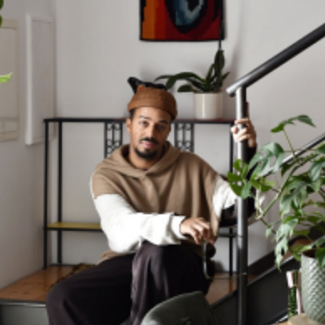
Paul Maheke (b. 1985, France) lives and works in Montpellier. Through various artistic forms and disciplines, Maheke has undertaken a sustained exploration of the ways marginalized bodies, narratives, and histories are rendered visible and invisible. Resisting an approach to identity that remains confined within the framework of identity politics, Maheke’s practice is channeled through spectral sensations. The artist calls upon ghosts, spirits, and non-human entities in their works to encourage a reorientation of perception, inviting audiences to reconsider how they see, feel, and listen.
In reconfiguring the sensible, Maheke seeks to disrupt dominant systems of discourse that prioritize representation, visibility, and legibility as ultimate markers of truth, value, and power. Instead, the artist cultivates a self in a state of in- betweenness—where esoteric, spiritual, queer, and embodied knowledge(s) create potential for prophecy.
His work has been shown at Tate Modern and Tate Britain, London, the Venice Biennale, Smithsonian National Museum of African Art, Washington, The Renaissance Society, Chicago, Mercer Union, Toronto, Performa, New York, Centre Pompidou, Palais de Tokyo, Bourse de Commerce - Collection Pinault and Lafayette Anticipations in Paris, MO.CO, Montpellier, Triangle France, Marseille, Baltic Triennial 13, Manifesta 12, Palerme, Cabaret Voltaire, Zurich, Chisenhale Gallery and The South London Gallery, London, among others.
Paul Maheke is the recipient of the 25th Foundation Pernod Ricard Prize and will be a fellow at the Villa Medici – French Academy in Rome for the 2025-2026 academic year.
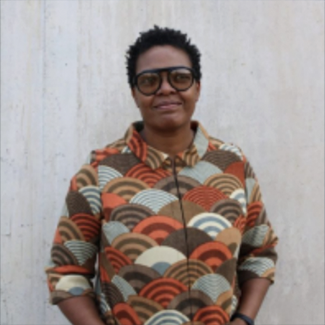
Gabi Ngcobo is the Director of Kunstinstituut Melly, Rotterdam, NL. Between 2020 and 2023 she was Curatorial Director at the Javett Art Centre at the University of Pretoria (Javett-UP) where she curated Handle with Care (2021), SCENORAMA (2022) and in 2023, Frequencies, a project by Oscar Murillo and Specifications for a Reverse Archaeology with artists Nolan Oswald Dennis. Gabi has worked on independent curatorial projects, collaborated with various institutions in different parts of the world and for seven years lectured at the Wits School of Arts in Johannesburg. In 2022 she curated The Show is Over at the South London Gallery and co-curated The ‘t’ is Silent at the Museum Dhondt- Dhaenes in Deurle, Belgium. In 2018 she curated the 10th Berlin Biennale titled We Don’t Need Another Hero and was one of the co-curators of the 32nd Sao Paulo Bienal titled Incenteza Viva (2016). She is a founding member of the Johannesburg based collaborative platforms NGO – Nothing Gets Organised (2016-) and the Center for Historical Reenactments (2010–14).
Gabi was part of the Founding Commission that selected the Indonesian collective, Ruangrupa, to curate documenta 15 in 2022. She has set on numerous jury committees, including Future Generations Art Prize 2021, Artes Mundi 2023 and Berlin Biennale 2022.
Her writings have been published in various publications including Shooting Down Babylon: The Tracey Rose Retrospective at Zeitz MoCCA, Cape Town, (2022), Uneven Bodies, Govett-Brewster Art Gallery, Aotearoa New Zealand (2021), The Stronger We Become the catalogue of the South African Pavilion, Venice (2019), We Are Many: Art, the Political and Multiple Truths and Texte Zur Kunst September 2017.
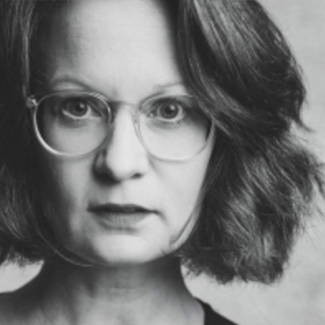 Sandra Noeth is a professor at Berlin University of the Arts, and a practicing curator and dramaturge. She specializes in body based research in the arts, in society, and politics, and often brings together knowledge from different artistic, social, political and activist fields and disciplines. Recent programs and publication projects focused the role, status and agency of bodies in bordering processes; the relation between arts, bodies and unequal politics of protection; the embodiment of violence; the ambivalent status of the body in international humanitarian law. She is the author of Resilient Bodies, Residual Effects. Borders and Collectivity from Lebanon and Palestine(transcript, 2019) as well as a co-editor of Breathe. Critical Investigations into the Inequalities of Life (with J. Janša, 2023) and Shielding: Body-based Studies on Integrity and Protection (with J. Janša and S. Umathum, 2024).Sandra was Head of Dramaturgy and Research at Tanzquartier Wien (2009– 2014) and worked as an educator with SKH-Stockholm University of the Arts and Ashkal Alwan Beirut, among others.
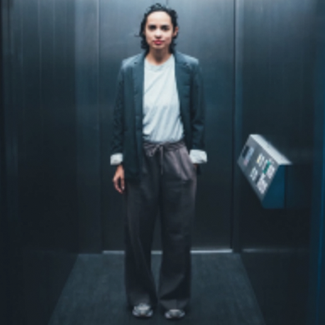
Esther Siddiquie is a PhD researcher and artist. Her work departs from a choreographic practice exploring the potentiality of somatic archival work to disrupt dominant archival narratives and practices. Her practice entails performative stagings of sensory encounters with archival objects, exploring the notion of ghostly matter between human and more than human entanglements leaning towards other registers of engagement with historic documents. She is a 2018-2019 and 2023-24 DAAD scholarship holder and a recipient of the Charlotte Kirk Patrick Award. Her works, ranging from Photography to performative occasions, and choreographic installations have been shown at ICA London, CAC Vilnius, Galerie Wedding, Favoriten Festival, atelier automatique, schwere reiter, kitev - LEERSTAND, Kunstmuseum Bochum, Tanzhaus NRW, Dance Umbrella Festival, New Lab, The Place, and Sadler's Wells. A graduate of London Contemporary Dance School and NYU Tisch School of the Arts, she is currently a PhD candidate in Advanced Practices at Goldsmiths University of London in the Art Department. Her research involves a critical examination of a film archive of UNESCO World-Cultural Heritage Sites by her late father, Shabbir Siddiquie. She is contributing a forthcoming chapter titled "Touching the Archive: On Critical Hyper Proximity" to The Contactless Condition, edited by Ofri Cnaani and Or Tshuva as part of the Data Browser Series, to be published by Open University Press in 2025.
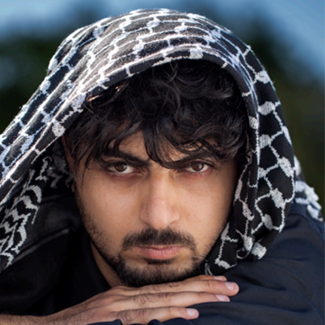
Mohanad Smama is a Palestinian dancer and choreographer from Gaza, currently on a one-year artistic residency dedicated to research and creation. This residency is supported by Les Rencontres à l’échelle / Bancs Publics, the Shonen company, the Ballet National de Marseille, and La Friche la Belle de Mai. He is also supported by the PAUSE program of the @collegedefrance, which assists artists and researchers at risk due to the security situation in their home countries. A pioneer of contemporary dance in Palestine, Mohanad founded Hai Team for Contemporary Arts, the first independent space dedicated to contemporary dance in Gaza. He has trained hundreds of young people in contemporary dance, dabke, and hip-hop. He is also a dance filmmaker, with work featured in international festivals. His work has been supported by institutions such as the French Institute of Jerusalem, the Ramallah Contemporary Dance Festival, the Arab American National Museum, the A. M. Qattan Foundation, the Cairo Opera House’s Modern Dance Company, the Goethe-Institut in Egypt, Ettijahat – Independent Culture, and Action for Hope.
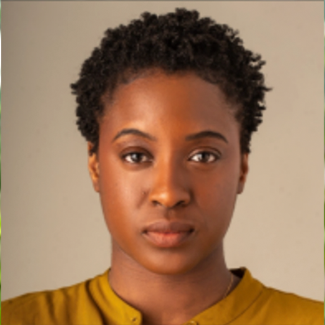 Dr. Tia-Monique Uzor is a lecturer in Contemporary Caribbean and African Diasporic Dance and Performance. As an artist scholar, she critically engages Africanist dance as a vehicle for creating and interrogating African and African Diasporic worlds through interdisciplinary approaches and embodied research. Her current practice is interested in exploring the intersections of ecological and social injustice experienced across Black geographies through digital performance. For this, she has been awarded a grant from the Arts and Humanities Research Council for the Digital Black Dance Ecologies project. In 2022, she produced, directed, and choreographed the short dance film The Noise My Leaves Make which explores Black British women’s intimacy and pleasure in the English countryside. This film was funded during her tenure as a postdoctoral research fellow on the AHRC project Creative Approaches to Race and In/security in the Caribbean and the UK, led by Professor Pat Noxolo. The Noise My Leaves Make has been showcased at festivals worldwide and has received multiple accolades, including being a finalist at Dance Camera West 2023 in Los Angeles, winning the jury award for Best Experimental Short at the Cannes Short Film Festival 2023, and receiving Best Director and Cinematography awards at Black Lives Rising in New York, along with a special mention in the international competition at Cámara Corporizada, Buenos Aires. For the past four years, Tia-Monique has focused on dance data projects, including Dunham’s Data: Katherine Dunham and Digital Methods for Dance Historical Inquiry (2018-2022), which received the ATHE-ASTR Award for Excellence in Digital Theatre and Performance Scholarship. She was a project team member on Radical Accounting: Alvin Ailey American Dance Theater’s Data as a Framework for Historical Imagination, a dance data commission from the Whitney Museum of American Art featured in the Edges of Ailey exhibition, running until February 2025.
Gee Wesley is an arts organizer born in Monrovia, Liberia, and based in Brooklyn, NY, and Providence, RI, where he is a PhD student at Brown University in the Department of Modern Culture and Media. His work explores how the aesthetic and cultural practices of Black diasporas inspire liberatory ways of redefining knowledge, transforming value, and restoring the past. Before Brown, Wesley held roles as a Curatorial Associate at the Museum of Modern Art (New York, NY), Program Director at Recess (Brooklyn, NY), Curatorial Fellow at SculptureCenter (Queens, NY), and Curatorial Fellow at the Institute of Contemporary Art (Philadelphia, PA). Wesley has been adjunct faculty at Bard College, Bennington College, the Maryland Institute College of Art, and the Yale School of Art. He is a co-founder of Ulises, a nonprofit art bookshop based in Philadelphia, and the founder of Afrophon' a project dedicated to contemporary African artists' books, art books, and independent art publishing. Wesley received his M.A. from the Center for Curatorial Studies at Bard College.
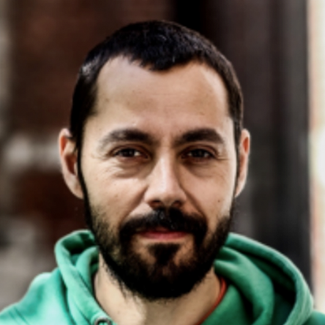
Arkadi Zaides works as a choreographer, curator, and researcher. He obtained a master’s degree at the AHK Academy of Theatre and Dance in Amsterdam. Since 2021, he is a doctoral researcher in the Arts at the University of Antwerp, Royal Conservatoire Antwerp, Ghent University, and KASK/School of Arts (HoGent). He is a member of the CORPoREAL research group at the Royal Conservatoire Antwerp and the research center S:PAM (Studies in Performing Arts & Media) at Ghent University. His performances and video installations have been presented at numerous dance and theatre festivals, museums, and galleries across Europe, North and South America, and Asia. Zaides is a recipient of various awards, among them a prize for demonstrating engagement in human rights issues, awarded to him by the Emile Zola Chair for Interdisciplinary Human Rights Dialogue.
9th Study Cycle - Surrender to the Air: Movement, Refusal, and the Politics of Flight

9th Annual Study Cycle
June 15 - 19, 2026
MO.CO Panacée
14 Rue de l’École de Pharmacie 34000 Montpellier
Organized by Gee Wesley
Presenters:
Sepake Angiama
Clara Balaguer
Thomas F. Defrantz
Rhea Dillon
Anjalika Sagar of The Otolith Group
Surrender to the Air: Movement, Refusal, and the Politics of Flight is a week-long student and public convening scheduled for 15-19 June, 2026 at the MO.CO Panacée led by Gee Wesley.
"For now he knew what Shalimar knew: If you surrendered to the air, you could ride it."
— Song of Solomon, Toni Morrison (1977)
"The flight from the self is a flight into the void."
— The Fire Next Time, James Baldwin (1963)
Inspired by Toni Morrison's vision of surrender to the air and James Baldwin's caution against the flight from the self, this symposium considers how selfhood, collectivity, and belonging are imagined in and through practices of flight. Through a range of interdisciplinary contributors, we will address flight as a persistent theme in both Black aesthetics and for diasporic peoples across the globe. Contributors will explore themes of elevation, escape, and fugitivity drawn from movement practices, emancipatory projects, and public life. Together, we will examine acts of flight across various registers from the travel of forced migration of refugee displacement to African American folkloric traditions of flying Africans. Altogether, these sessions will grapple with flight as it figures in radical acts of refusal, fugitive escape, and collective movements toward freedom, be that anti-carceral escape, resistance to empire, or practices of worlding inspired by mythic or fabulated visions of ascension.
Surrender to the Air: Movement, Refusal, and the Politics of Flight is the ninth annual Study Cycle Symposium organized for Low Residency MFA in Dance at Bennington College. The symposium is free and open to the public with prior reservations.
To reserve, please email lrmfadance@bennington.edu
Google Translate on a personal device is recommended for live translation/transcripts of the sessions
S C H E D U L E
MONDAY JUNE 15th
12:30 - 14:00 Gee Wesley
14:00 - 15:00 pause
15:00 - 16:30 Thomas F. DeFrantz
16:30 Kiki Smith Exhibition Tour
TUESDAY JUNE 16th
11:00 - 12:30 Clara Balaguer
12:30 - 14:30 pause
14:30 - 16:00 Conversation: Clara Balaguer, Thomas F. DeFrantz, and Gee Wesley
17:00 Emanuel Gat Viewing
WEDNESDAY JUNE 17th
11:00 - 12:30 Rhea Dillon
12:30 - 14:30 pause
14:30 - 16:00 Conversation: Rhea Dillon and Gee Wesley
THURSDAY JUNE 18th
11:00 - 12:30 Screening: The Otolith Group (work by Anjalika Segar and Kodwo Eshun)
12:30 - 14:30 pause
14:30 - 16:00 Closed-Door Workshop for students only
FRIDAY JUNE 19th
11:00 - 12:30 Sepake Angiama
12:30 - 14:30 pause
14:30 - 16:00 Anjalika Sagar of The Otolith Group
16:00 - 16:30 pause
16:30 - 17:30 Closing Panel
P A R T I C I P A N T B I O G R A P H I E S
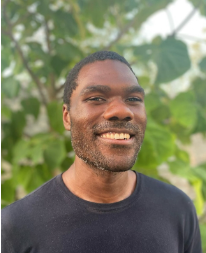 Gee Wesley was born in Monrovia, Liberia and is based in Brooklyn, NY, and Providence, RI, where he is a PhD student at Brown University in the department of Modern Culture and Media. Before Brown, Wesley held roles as a Curatorial Associate at the Museum of Modern Art (New York, NY), Program Director at Recess (Brooklyn, NY), Curatorial Fellow at SculptureCenter (Queens, NY), and Curatorial Fellow at the Institute of Contemporary Art (Philadelphia, PA). He has been adjunct faculty at Bard College, Bennington College, the Maryland Institute College of Art, and the Yale School of Art.
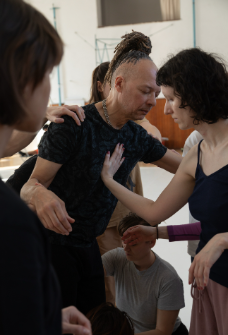 Thomas F. DeFrantz, Professor at Northwestern University, directs SLIPPAGE: Performance|Culture|Technology, a humanities and creative research lab. Believes in our shared capacity to do better and engage creative spirit for a collective good that is anti-racist, proto-feminist, and queer affirming. Convenes the Black Performance Theory working group and is founding director of the Collegium for African Diaspora Dance. Faculty and teaching at the University of the Arts Mobile MFA in Dance; ImPulsTanz; SNDO; Juilliard; New Waves Institute; P.A.R.T.S.; Movement Research; Bennington College; faculty at Hampshire College, Stanford, Yale, MIT, NYU, Duke, the University of Nice. DeFrantz contributed concept and a voice-over for a permanent installation on Black Social Dance that opened with the Smithsonian Museum of African American Life and Culture in 2016. Books: The Oxford Handbook of Black Dance Studies (2026); Dance History(s): Imagination as a Form of Study (with Annie B-Parson, 2024), Routledge Companion to African American Theater and Performance (with Kathy Perkins, Sandra Richards, and Renee Alexander Craft, 2018), Choreography and Corporeality: Relay in Motion (with Philipa Rothfield, 2016), Black Performance Theory: An Anthology of Critical Readings (with Anita Gonzalez, 2014), Dancing Many Drums: Excavations in African American Dance (2002), and Dancing Revelations: Alvin Ailey's Embodiment of African American Culture (2004).Current creative projects: ...lonely ...; particles, fields, and the void; dear alvin. So happy to think and work with Donna Faye Burchfield.
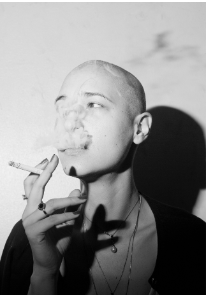 Clara Balaguer (Makati City, Pisces Metal Monkey) is a cultural worker, educator, and publisher. From 2010 to 2018, she worked with communities from the Philippines through The OCD, a living room residency and material culture research unit. In 2013, she co-founded Hardworking Goodlooking, a publishing hauz interested in cottage industry, horror vacui, and the value of error. Tactically, she infiltrates institutions: in 2018–2021 as head of Social Practices at Willem de Kooning Academy and in 2021–2025 as curator of Civic Praxis at BAK, basis voor actuele kunst. Currently, she teaches Experimental Publishing (XPUB) at Piet Zwart Institute and Design Department at Sandberg Institute. Consistently, she operates under collective or individual aliases that experiment with remittance, circulation, distribution, and transmission, the latest of which are To Be Determined and Galley Copy Shoppe.
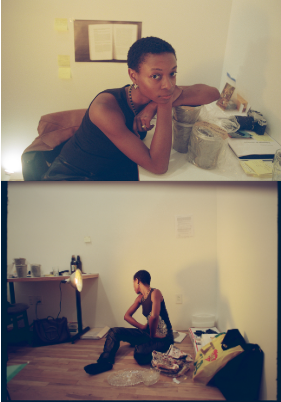 Rhea Dillon is an artist, writer and poet based in London and New York. Select recent solo and group exhibitions include "Heads" at the American Academy of Arts and Letters, NYC; "DFT 2025" at Wesleyan University, Connecticut; "Gestural Poethics" at Heidelberger Kunstverein, Germany; "Accumulation – On Collecting, Growth and Excess", The Migros Museum of Contemporary Art, Zurich; "Fractal Being" at Cordova, Barcelona; "Air de Repos (Breathwork)" at Capc Bordeaux, France; "Tituba, qui pour nous protéger?" at Palais de Tokyo, Paris; "Each now, is the time, the space" at Lismore Castle Arts, Ireland; and "The Black Fold" at Kunstverein Kevin Space, Vienna. She was an Elaine G. Weitzen Studio Program Fellow at the Whitney Museum's Independent Study Program 2024/2025 in New York. For 2024, she was the guest editor of the Interjection Calendar for Montez Press. Dillon’s first institutional solo exhibition ‘An Alterable Terrain’ was held at Tate Britain in 2023-4 as part of the Art Now series. To accompany this, a book of the same title was edited by her and published by Tate in 2024. In 2021 the artist presented "Catgut – The Opera" as part of Park Nights at the Serpentine Pavilion, and a publication of the same title was published in 2023 by Worms Publishing.
Photos of Rhea Dillon taken by Clifford Prince King
 Anjalika Sagar was born in 1968, in London, where she lives and works. She studied social anthropology at the School of Oriental and African Studies at the University of London. Her work includes curatorial projects, essays, films, videos and photographic works. She is interested in the relationships between sound, text and image, archives and the potential legacies of film. She has produced numerous projects that have been seen in museums around the world, such as the large-scale production NO ARRIVAL NO PARKING, with the composer Heiner Goebbels, for the Almeida Theatre, London. She is co-founder of The Otolith Group and founder of Multitudes.
The Otolith Group have researched and produced densely textured moving images works, installations, photographs, murals and performances, which frequently reference the trajectories of the non-aligned, and the transnational legacies of the global majority and its diasporas. Their works have been commissioned and presented by museums, galleries, biennials, and foundations worldwide. Recent monographic exhibitions include: MASCON A Massive Concentration of Black Experiential Energy and MASCON A Massive Concentration of Black Interscalar Energy across Chicago as part of Project A Black Planet at the ART INSTITUTE OF CHICAGO and the NEUBAUER COLLEGIUM, at the Fondazione Sandretto Re Rebaudengo in Turin, Italy (2024); Secession in Vienna (2022); and the Irish Museum of Modern Art in Dublin (2022). As curators and theorists The Otolith Collective is an NPO and have engaged in the conception, creation and convening of platforms that make public ongoing research that informs their practice at large.
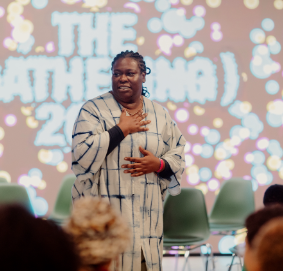 Sepake Angiama praxis stems from radical pedagogies, black feminist thought, rethinking human/non–human relations rooted in how we might reimagine and inhabit the world otherwise. She is the artistic director of the Institute of International Visual Arts (iniva), dedicated to developing artistic research, embodied practices, collective study, publishing and community led commissioning that reflects on the social and political impact of globalisation. She has previously held positions at Tate Modern, Manifesta and documenta. Her current research and thinking stems from an interest in spatial justice, speculative thinking and intentional communities grounded in radical imagination towards creating ecologies of care, empathy and kindness.
Connect With Your Faculty Team
Immersed in these dynamic relationships created by members of this community from around the world, students develop practices, pedagogies, and research models that value experimentation and continuously question the role of dance within and beyond traditional environments. Using symposia, retreats, and residency frameworks as ways to gather and learn, this program aims to foster new communities and networks of exchange for knowledge production and artistic practices.
Faculty, mentors, affiliated artists, and guest lecturers represent an intentionally diverse array of approaches to theorizing and practicing embodied knowledge in relation to citizenship and art-making.
Connect with the Leadership Team

How to Apply
The Low-Residency track is designed for mid-career artists, teachers and dance professionals.
Applications for the program are now open with a deadline of March 1st.
Students applying to the low-residency MFA in Dance must complete the online low-residency MFA Application. Additionally, we require:
- an artistic portfolio that may include choreographic works, curatorial platforms, pedagogical experiences and creative projects that exemplify the applicant's research, practice and trajectory of study. Submissions should be examples of applicants' most recent work and must include a work’s description.
- an artist statement and essay, 350–500 words each.
- a CV or resume.
- two letters of recommendation from mentors, mentors, teachers or professionals in the dance world with whom you have worked.
- transcripts from all schools attended.
Submitting Your Application
We encourage you to submit your application entirely online. However, if you would like to include work whose physicality is critical to its nature, please reference this work in your digital application and then send a single package to Bennington College, Office of Admissions, One College Drive, Bennington, VT 05201. Please include your first and last names and your date of birth. All materials must be received by the application deadline.
Deadlines
Applications are due March 1.
Scholarships & Financial Aid
Tuition and Fees
Academic Year 2026–2027
Total tuition for 2026-2027 of the Low-Residence MFA in Dance is $68,160 (60 credits x $1,136 per credit), plus $250/semester low residency fees and a $500 enrollment fee, for a total program cost of $69,660. If you decide not to attend Bennington College, the $500 enrollment fee will be forfeited.
Tuition Updated: March 2026
Questions?
Email donnafayeburchfield@bennington.edu with any questions about this program.
Follow us on Instagram