
AI, Creativity, and Ethics
Spend a week exploring how artificial intelligence is reshaping creativity, decision making, and everyday life. No technical background required.
Enrollment is now closed for Summer 2026
August 17-21, 2026
Location: Bennington, Vermont
Format: In-person, non-credit
Audience: Ages 18+
Bennington alumni are eligible for an additional 10% discount.
Artificial intelligence is increasingly shaping how we create, think, and make decisions. Yet most people encounter it only through tools, without understanding the internal workings, what assumptions they encode, and what changes when we allow them to stand in for human judgment or creative labor.
This workshop offers a different approach. Rather than focusing on technical training, it invites participants to explore AI as a human-built system connected to creativity, exploration, interpretation, and decision making.
Over the course of a week, you’ll carefully examine how AI is being used in writing, art, and design while developing a deeper understanding of the ideas, assumptions, and ethical questions behind it. The emphasis is on understanding, not mastery.
Program Highlights
- Create a small AI-assisted creative project (writing, visual media, or design)
- Develop a clearer understanding of how AI systems work conceptually
- Explore key questions around authorship, bias, and responsibility
- Produce a short reflective statement on AI, creativity, and ethics
- Receive a certificate of completion from the Bennington Center for AI (BCAI)
 Designed for
- Students and adults curious about AI’s role in creative work
- Writers, artists, and designers exploring new tools and ideas
- Individuals interested in understanding AI beyond surface-level use
- Anyone thinking about the future of creativity, technology, and decision making
No technical experience is required, only curiosity and a willingness to engage.
Faculty
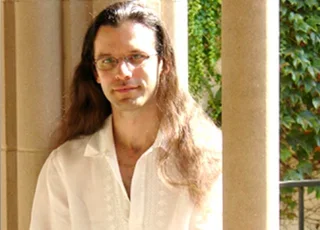
Location and Experience
Set in the mountains of southern Vermont, Bennington College offers an environment designed for focus and creativity. Its strengths in the arts, writing, and design make it an ideal setting for exploring questions of authorship, interpretation, and technology.
Mornings are structured, with faculty-led sessions. Afternoons are more flexible with opportunities for individual or group work, informal collaboration, or exploration of campus and the surrounding area. Evenings are unstructured, giving you space to rest, connect, or continue your work in your own way.

Pricing and Logistics
Tuition: $700
Room: $550 (optional)
Board: $450 (optional)
Bennington alumni are eligible for an additional 10% discount.
Duration: One week, with participants arriving August 16 and departing August 22
Format: In-person, non-credit
Eligibility: Ages 18+
Frequently Asked Questions
What is the daily schedule like?
Sample Schedule:
AI Course (9:00 AM - 12:00 PM)
Theme: Understanding AI Outputs — Why They Seem Convincing, and Where They Fail
Students begin with a simple premise: generative AI systems produce fluent language, but fluency is not the same as understanding. The session is organized around testing that claim directly.
| 9:00 AM - 9:30 AM |
Establishing a Working Model The morning opens with a minimal conceptual model of AI:
Students are asked to hold this model provisionally and test it against what they observe. Key question:
|
| 9:30 AM - 10:15 AM |
Demonstration: Competence Without Understanding Students examine an AI-generated response to a structured prompt (for example, a literary or historical explanation). The output is typically:
Working in small groups, students evaluate the response as if it were submitted by a peer. Discussion focuses on:
Key question:
|
| 10:15 AM - 10:30 AM | Break |
| 10:30 AM - 11:15 AM |
Demonstration: Failure Under Constraint Students are given a second AI-generated response to a more demanding prompt (one that requires integrating multiple kinds of knowledge; for example, combining textual analysis with technical detail, or connecting evidence to a specific formal constraint). The output typically:
Students are asked to identify where the response breaks down. Discussion focuses on:
Key questions:
|
| 11:15 AM - 11:50 AM |
Structured Analysis: Reliability and Risk The group shifts from examples to generalization. Students synthesize what they have observed:
Students consider practical implications:
|
| 11:50 AM - 12:00 PM |
Closing The session ends by returning to the central premise:
Question for the afternoon/next day:
|
Do I need a technical background or coding experience?
No. This program is designed for participants with no technical background or prior experience with artificial intelligence. The focus is on understanding AI conceptually rather than technically.
Is this course for credit?
No, this is a non-credit summer program.
Is this a technical or skills-based course?
No. This course is not focused on technical training or the development of programming skills.
What will I create during the program?
You will develop a small, AI-assisted creative project. You will also develop a short reflective statement on AI, creativity, and ethics.
Can I attend the program online?
No. The program is only available in-person.
How do I request accommodations and support?
If you need accommodations and support, please email summer@bennington.edu.
What is the time commitment each day?
Mornings are structured, with faculty-led sessions. Afternoons are more flexible with opportunities for individual or group work, informal collaboration, or exploration of campus and the surrounding area. Evenings are unstructured, giving you space to rest, connect, or continue your work in your own way.
Is there wifi available?
Yes. Bennington offers two wireless networks. Please view more information about accessing Bennington’s wifi networks.
How do I get to campus?
Please see more information about getting to Campus.
What is the refund policy?
- Cancel by June 15, 2026 - Full refund
- Cancel by July 15, 2026 - 50% refund
- Cancel by August 1, 2026 - No refund
Can I get scholarships or financial aid from Bennington College for summer programs?
We do not currently offer scholarships or financial aid for summer programs.
Can I set up a payment plan for summer programs?
We do not currently offer payment plans.
Additional questions can be directed to summer@bennington.edu.