
Conservatory for Creative Writing BFA Program
Join Our Creative Writing Community
The Bachelor of Fine Arts (BFA) in Creative Writing offers an inclusive and welcoming student-centered conservatory experience with the rigorous scholarship, individualized mentorship, and creative energy one would typically find at the graduate level.
Designed specifically for transfer students, but with pathways for other prospective students, the creative writing program provides an immersive graduate-style experience for undergraduates.
The BFA in Creative Writing builds upon Bennington’s extraordinary legacy of excellence in writing and literature, allowing students to read, write, and be read as they develop their craft in a vibrant artistic and intellectual environment.
Transfer Information and Deadlines
Current Bennington College students interested in applying to the BFA in Creative Writing should use the internal transfer application.
All students should follow the transfer deadlines outlined on the Admissions and Financial Aid Deadlines page.

 Program Highlights:
- Genres available include fiction or poetry
- Literature courses and electives from an array of academic and artistic disciplines.
- Individualized, pre-professional advising and guidance from a faculty of prominent poets and fiction writers
- Annual Field Work Terms, where you’ll spend six weeks off-campus each winter interning at a literary or arts organization, or pursuing other professional interests.
- Guided Summer Reading Terms, in which you will explore a curated list of books in your genre especially suited to you and your development as a writer.
- The opportunity to work on the national literary journal Bennington Review and interact with distinguished visiting poets and prose writers who regularly read on campus
- A culminating senior thesis in poetry or fiction, developed in close partnership with a faculty mentor.
- An exceptional record of nurturing emerging writers, including winners of the Pulitzer Prize, the National Book Award, and the National Book Critics Circle Award; and of preparing students for graduate study at such MFA programs as Cornell, NYU, and the University of Iowa Writers’ Workshop.

Program Information
Application Requirements
- Genres - Applicants must identify a genre of focus: Poetry or Fiction.
- Personal Statement - A 500-word essay to introduce yourself, explain why this program of study is well-suited to your endeavors, and discuss your relationship to reading and writing.
- A creative writing sample in your chosen genre:
- Poetry: Between 6-8 poems, with each poem beginning on a new page. Your sample must be no more than 15 pages in length.
- Fiction: A single complete short story or several short stories. Your double-spaced sample must be between 12-20 pages in length.
Eligibility
While the program is designed to be completed during a student’s final two years of college, sophomores are also accepted and encouraged to apply. The program is available to students from a wide range of backgrounds, including:
- Rising sophomores or juniors transferring from another two- or four- year institution.
- Rising sophomores who transferred from another institution and who will spend their sophomore year at Bennington pursuing a broad general curriculum of coursework before transitioning to the BFA.
- Incoming first-years who will have an opportunity to apply to the program before their junior year.
- Students who have previously completed an Associate’s degree, or who have taken significant time off from college and would like to resume their education with a creative writing focus.
Learn more about transferring to Bennington.
Student & Alumni Accomplishments
Our undergraduates have recently gone on to attend MFA and PhD programs in fiction, poetry, and nonfiction at:
|
|
Several of our alumni are now creative writing faculty at institutions including Arizona State University, Grinnell College, Pomona College, St. Joseph’s University, the University of Utah, Virginia Commonwealth University, and here at Bennington.
Other graduates have become editors, literary agents, freelance writers, research librarians, educators, and journalists. They frequently stand out for their distinctive aesthetic sensibilities and their ambitious literary endeavors.
In the last decade, our undergraduate students and alumni have:
Published books of poetry with
| Action Books | Milkweed Editions |
| Brooklyn Arts Press | Newfound Editions |
| Changes Press | Small Harbor Publishing |
| Copper Canyon | Spuyten Duyvil |
| Four Way Books | University of Pittsburgh Press |
Published books of fiction and nonfiction with
| Black Ocean | McNally Editions |
| Crown | New Vessel Press |
| Doubleday | Penguin |
| Graywolf Press | Simon & Schuster |
| Grove Atlantic | Soft Skull Press |
| HarperCollins | Summit Books |
| Hogarth | Tin House Books |
| Knopf | Wiliam Morrow |
Had their poetry manuscripts selected for the National Poetry Series, the Changes Book Prize, the APR/Honickman First Book Award, the Poetry Society of America Chapbook Fellowship, and the Rattle Chapbook Award
Published flash fiction in The New Yorker shortly after graduation and investigative journalism in Vanity Fair
Won the Amy Lowell Travelling Scholarship, the Levis Reading Prize, and a Rona Jaffe Foundation Writer’s Award, and named a finalist for the National Book Critics Circle's John Leonard Award for best first book
Received writing fellowships to the Fine Arts Work Center in Provincetown and the Stegner Creative Writing Program at Stanford, and have been selected to participate in the tuition-free Bucknell Seminar for Undergraduate Poets
Received prestigious Whiting Writers’ Awards in poetry and nonfiction
Won the Barnes & Noble Discover Award for a debut novel, the OCM Bocas Prize for Caribbean Literature, the National Book Critics’ Circle Award for Autobiography, and the National Book Award for Translated Literature
Notable Bennington writers include:
- Lis Harris ‘61, acclaimed nonfiction writer, critic, and longtime New Yorker staff writer
- Anne Waldman ‘66, poet, performer, editor, and scholar
- Andrea Dworkin ‘68, noted radical feminist writer and activist
- Roxana Robinson ‘68, novelist, critic, and Georgia O’Keefe biographer
- Katharine Holabird ‘69, author of the Angelina Ballerina book series
- Kathleen Norris ‘69, poet and essayist
- Lynn Emanuel ‘72, winner of the 2016 Lenore Marshall Poetry Prize for The Nerve of It: Poems New and Selected
- Mary Ruefle ‘74, a finalist for the Pulitzer Prize, the LA Times Book Award, and the National Book Critics Circle Award for her poetry and criticism
- Alec Wilkinson ‘74, noted nonfiction writer and longtime New Yorker staff writer
- Megan Marshall ’75, winner of the 2014 Pulitzer Prize in Biography for Margaret Fuller: A New American Life.
- Michael Pollan ‘77, environmental journalist famous for his books, The Botany of Desire and The Omnivore's Dilemma
- Susan Wheeler ‘77, finalist for the National Book Award in Poetry
- Jill Eisenstadt ‘86, acclaimed author of the novel Far Rockaway
- Bret Easton Ellis ‘86, acclaimed author of American Psycho and Rules of Attraction
- Jonathan Lethem ‘86, winner of the National Book Critics Circle Award for is novel Motherless Brooklyn
- Donna Tartt ‘86, winner of the 2014 Pulitzer Prize in Fiction for her novel The Goldfinch
- Reginald Shepherd ‘88, noted poet and critic
- Jonathan Marc Sherman ‘90, acclaimed playwright
- Kiran Desai ‘93, winner of the 2006 Booker Prize for her second novel, The Inheritance of Loss, and shortlisted for the 2025 Booker Prize for her third novel, The Loneliness of Sonia and Sunny
- Luke Mogelson ‘05, noted journalist and fiction writer who has received a National Magazine Award and a George Polk Award for his reporting
- Safiya Sinclair ‘10, acclaimed poet who won the National Book Critics Circle in Autobiography for her memoir How to Say Babylon
- Bruna Dantas Lobato ‘15, novelist and translator who won the National Book Award in Translated Literature
Student Experience
In addition to coursework, students will attend Literature Evenings, including the eight annual Poetry at Bennington readings. They may also have opportunities to:
- Participate in on-campus literary endeavors, including organizing readings, joining open mic events, and editing student publications (including the literary journal SILO, and our newspaper The Bennington Lens).
- Work on the award-winning, faculty-edited literary journal Bennington Review, which accepts submissions from established and emerging writers around the world, both for class credit and as paid winter interns.
- Participate in the annual 6x6 Student Reading, which partners with faculty and students at Williams College and Sarah Lawrence College to host student poetry readings and workshops. Events are held on all three campuses, with six poets from each school giving six-minute public readings.
Curriculum and Requirements
- Sophomore year: If a student enters the program as a sophomore, they can take some of the BFA classes in their sophomore year and will have the opportunity to take more literature and other elective coursework outside of the core program.
- Junior year: For their first two terms, students will complete one genre workshop per term, one craft class or professional development course, and two electives.
- Senior year: In their final year, students will substitute one elective for a yearlong thesis project within a tutorial setting, working closely with their faculty advisor.
- Off-term requirements: The BFA requires two winter Field Work Terms (six-week internships), as well as two Summer Reading Terms (with specific genre focus).
Summer Reading Term
Guided Summer Reading Term
Upon enrollment in the BFA, students will meet with a faculty advisor to collaboratively craft an individual reading list of 10-12 books, which they will be expected to read during the summer. To successfully complete the Summer Reading Term, students will write a letter reflection on their summer experience that their faculty advisor will review and approve.
After the completion of their junior year, students will again meet with a faculty member to craft another list of 10-12 books – this time with a focus on works that can inform their senior thesis project. They will also follow the MFA reading and lectures to augment their studies and write a letter reflecting on their experience to send the faculty advisor for approval.
Field Work Term
Winter Field Work Term
Field Work Term, a unique aspect of the Bennington education, allows students to engage in off-campus internships, independent studies, or research. Our literature students have completed their Field Work Terms at literary agencies, literary journals, newspapers, working as editorial assistants, and numerous other endeavors.
Students in the BFA will complete two winter Field Work Terms during their junior and senior years (three if they enter the BFA program as sophomores). These experiences can include independent studies/tutorials, study abroad, or reflective travel/independent research. Students will have a faculty sponsor from the Creative Writing or Literature faculty directly related to their studies.
On Campus and Beyond
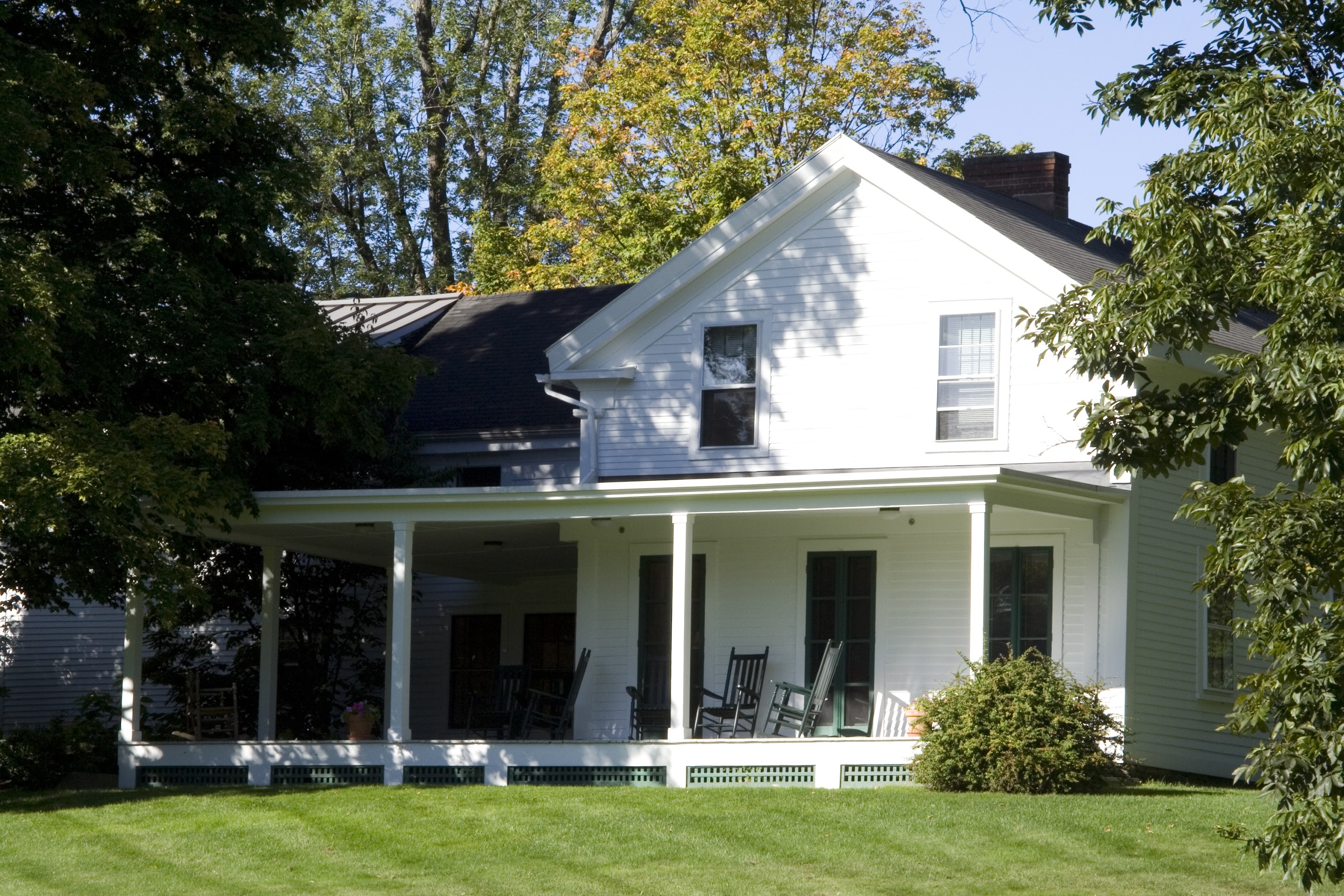
- The Cricket Hill Literature House offers a cozy library and reading room, complete with a fireplace and bookshelves for students to peruse. It is home to multiple creative writing and literature faculty offices, our BFA and MFA programs, Bennington Review, and our student-edited journal Silo. The porch, overlooking the mountains, is a popular site for outdoor student readings, studying, and contemplation. Cricket Hill also has a study lounge and desks for students.
- Bennington’s campus includes the Usdan art gallery, outdoor spaces including a pond with nesting birds, a community vegetable garden, as well as state-of-the-art visual arts and performance facilities.
- The surrounding region has numerous new and used bookstores, parks and hiking trails, places to ski and snowboard, lakes and swimming holes, and a year-round farmers’ market. The region hosts several world-class museums, including the Clark Art Institute, the Bennington Museum, and the Massachusetts Museum of Contemporary Art (MASS MoCA), to which students receive free admission.
- The rich resources of this part of New England make field trips a common feature of our courses. Boston, New York City, and Montreal are each within a four-hour drive from Bennington, and are all accessible by Amtrak from Albany.
What Our Students Say
"I transferred to Bennington from a more standardized program in search of a holistic and self-driven literature education, and found that it has one of the most personalized and well-resourced programs in the country. The attentive faculty, genuinely rigorous workshops, and unique opportunities, all while living on such an idyllic and inspiring campus with a community of creatives, more than prepared me for the challenges of life beyond college.
I would encourage anyone to apply to Bennington, especially those looking for something above and beyond the typical classroom experience."
Josephine Gawtry (she/her)
MFA Candidate in Poetry & Gill-Ronda Fellow
Assistant Director, Creative Writing Reading Series
Associate Editor & Media Manager, Colorado Review
“When I transferred, it set me on a creative path I wouldn’t have found without the support of Bennington’s writing community. Among my peers, I met some of the best readers of my work, who will likely be some of my lifelong friends. It’s not a competitive environment per se, but a generative one, where our writing thrived because we were reading widely, sharing openly, and learning from one another. The faculty generously shared their insights in one-on-one meetings and in the classroom, offering real mentorship that helped me grow as a writer and reader.
The Poetry at Bennington series also brought exciting contemporary writers to campus for readings and artist talks. It gave me the chance to meet one-on-one a few times with visiting poets—an experience that made me more comfortable speaking about my work and poetry in general.
All of this prepared me to enter graduate-level workshops at Iowa with a developed sense of care for my peers’ work and the confidence to carry and further refine my own voice as a writer. There is truly no place like Bennington.”
Nicole Migneault
MFA Candidate in Poetry, University of Iowa Writers Workshop
BFA Program Co-Directors

Creative Writing and Literature Faculty
| Recent visiting writing faculty include: |
Frequently Asked Questions
Who can apply for admission to the BFA?
The BFA in Creative Writing program welcomes applications from transfer students who have completed one or two years studying broadly at another college. These applicants will already have a serious interest in creative writing, with a desire to hone their craft in a liberal arts environment. We also invite applications from graduates of community colleges interested in pursuing further undergraduate creative writing study in an MFA-like setting, and from anyone interested in returning to college after some time away to complete a creative writing degree.
Current BA students at Bennington who are interested in switching to the BFA track may also apply internally to the BFA program.
Current high school students applying to Bennington who are interested in the BFA should indicate their interest in their application to the college. Once they enroll at Bennington, they’ll receive additional guidance on how to pursue their interest in the program.
What should I submit for my writing sample?
We want to see writing that you feel is true to your identity, abilities, and vision. It should showcase your personal and unique strengths. We are looking for applicants who can demonstrate the ability to produce polished original work that feels carefully proofread and thoughtfully edited. While applicants need not have studied creative writing previously, we are looking for students whose writing does not rely on cliches or abstractions, and that pays close attention to language and imagery.
What are your annual tuition and fees?
The BFA follows the same tuition and fee schedule as the BA program, with the same need- and merit-based financial aid opportunities. Please refer here for the College's latest information.
Do you offer scholarships & other financial aid?
The BFA in Creative Writing offers numerous scholarship opportunities. Awards are based on a combination of merit and need; there is no additional application process beyond the requirements listed in our standard application (either the Common Application or Apply Coalition).
More about cost and support:
Questions?
Email bfawriting@bennington.edu with any questions about this program.